
Clear Coat vs Paint Layer Scratch: South Wales Paint Supplier Reveals Depth Test
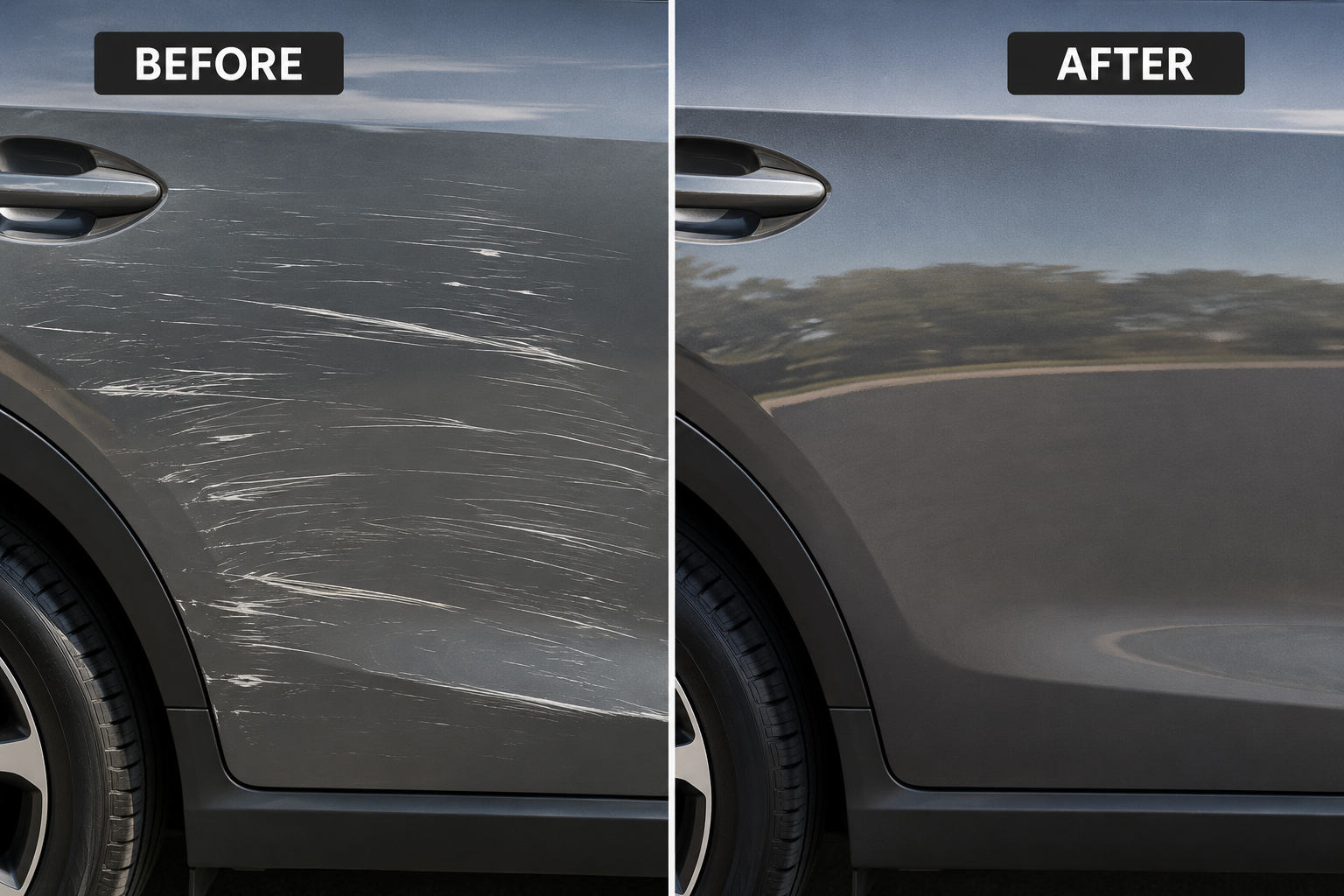
Ever run your fingernail across a car scratch to see how deep it goes? That simple test reveals whether you need a £5 polish or a complete paint repair—but there’s a critical detail most South Wales drivers miss that determines which approach actually works.
Key Takeaways
- The fingernail test provides an instant way to determine if a scratch penetrates beyond the clear coat – if your nail catches, it’s gone through to deeper paint layers
- Clear coat scratches often disappear when wet and reappear when dry, whilst paint layer damage remains visible regardless of water application
- South Wales car owners can repair surface-level scratches with simple polishing compounds, but paint layer damage requires colour-matched touch-up paint
- Professional paint thickness gauges measure in microns to prevent accidental burn-through during repair attempts
- Ceramic coatings and proper washing techniques significantly reduce scratch occurrence in Wales’ challenging weather conditions
Car scratches are an inevitable part of motoring life, yet the repair approach depends entirely on understanding how deeply the damage penetrates your vehicle’s paint system. Expert paint suppliers like IPS Paint emphasise that identifying scratch depth before attempting repairs prevents costly mistakes and ensures lasting results.
The Fingernail Test: How to Test Your First Line of Scratch Assessment?
The fingernail test remains the most accessible method for determining scratch severity. Simply run your fingernail gently across the scratch at a 90-degree angle. If your nail catches or drags in the groove, the damage has penetrated beyond the clear coat into deeper paint layers. Conversely, if your nail glides smoothly over the surface, the scratch likely affects only the protective clear coat layer.
This simple diagnostic technique works because fingernails have a consistent thickness and flexibility. When a scratch is deep enough to catch your nail, it indicates it has likely penetrated beyond the clear coat, which commonly measures between 30-60 microns thick on factory paintwork. Surface-level scratches, meanwhile, create minimal depression in the paint surface, allowing your nail to pass over without resistance.
However, the fingernail test has limitations. Very fine scratches may not register despite being deeper than they appear, whilst some surface contamination can create false readings. For this reason, professional detailers often combine the fingernail test with additional assessment methods for thorough damage evaluation.
Quick Scratch Assessment Checklist
The scratch is likely clear coat only if:
- Your fingernail does not catch
- It disappears when wet
- Paint colour remains unchanged
The scratch may require touch-up paint if:
- Your nail catches
- A different colour becomes visible
- Primer or metal is exposed
How Do You Tell If a Car Scratch Is Through the Clear Coat?
A scratch is usually only in the clear coat if:
- Your fingernail does not catch
- The scratch disappears when wet
- The vehicle colour underneath remains unchanged
If your fingernail catches or the scratch exposes a different colour or primer, the damage has likely penetrated into deeper paint layers and may require touch-up paint or refinishing.
Understanding Your Car’s Paint System Layers
Modern automotive paint systems consist of three distinct layers, each serving specific protective and aesthetic functions. Understanding this structure proves vital for selecting appropriate repair methods and avoiding further damage during restoration attempts.
1. Clear Coat: The Protective Shield
The clear coat forms the outermost layer, typically accounting for 33-50% of the total paint system thickness. This transparent protective barrier shields underlying layers from UV radiation, chemical contamination, and minor physical damage. Clear coats commonly measure 40-60 microns thick on factory paintwork, though premium vehicles may feature thicker applications.
Clear coat damage appears as light scratches, swirl marks, or hazing that doesn’t affect the vehicle’s colour appearance. When water is applied to clear coat scratches, they often disappear temporarily as the water fills the depression, only to reappear once the surface dries completely.
2. Base Coat: The Colour Layer
Beneath the clear coat lies the base coat, which provides your vehicle’s colour and metallic or pearlescent effects. This layer typically measures between 15-40 microns thick and contains the pigments and special effect particles that create your car’s distinctive appearance. Base coat damage immediately becomes visible as the scratch reveals a different colour or tone from the surrounding paintwork.
Scratches penetrating the base coat require colour-matched touch-up paint for proper repair. Unlike clear coat damage, base coat scratches remain visible regardless of water application, as the underlying colour has been compromised or removed entirely.
3. Primer: The Foundation
The primer layer sits directly on the metal substrate, providing corrosion protection and paint adhesion. Primer scratches appear white, grey, or sometimes red-brown, depending on the specific primer formulation used. These deep scratches pose immediate rust risks, particularly in coastal areas of South Wales where salt air accelerates corrosion processes.
Primer damage requires thorough repair involving primer application, base coat colour matching, and clear coat sealing. Attempting surface-level repairs on primer scratches invariably results in visible patch marks and potential long-term corrosion issues.
Scratch Severity Comparison Table
| Scratch Type | Fingernail Test | Visible When Wet | Repair Method |
|---|---|---|---|
| Clear coat scratch | No catch | Often disappears | Polish or compound |
| Base coat scratch | Slight catch | Still visible | Touch-up paint |
| Primer scratch | Deep catch | Always visible | Full repair process |
What are the 7 Common Causes of Car Paint Scratches?
The 7 most common causes of car paint scratches are:
- Improper washing
- Dirty sponges or wash mitts
- Automatic car washes
- Tree branches
- Road grit and salt
- Poor drying techniques
- Parking damage
Professional Tools vs DIY Methods for Depth Testing – Which is Best?
Paint Thickness Gauges for Accurate Assessment
Professional paint thickness gauges provide precise measurements in microns, allowing accurate assessment of remaining paint thickness before repair attempts. These instruments use magnetic induction for steel panels or eddy current technology for aluminium surfaces.
Paint thickness gauges prevent the common mistake of “burning through” during polishing or compounding operations. By measuring the existing paint thickness, technicians can determine how much material removal is safe without exposing underlying layers. Professional-grade paint thickness gauges typically cost from around £180 to over £3,500, while entry-level models suitable for DIY use can start from as low as £12.
When using paint thickness gauges, take multiple readings around the scratch area to establish baseline measurements. Subtract the scratch depth from the total clear coat thickness to determine safe polishing limits. If the calculation shows insufficient clear coat remaining, alternative repair methods become necessary.
The Water Trick Alternative Method
The water trick offers a cost-free alternative for basic scratch assessment. Mist the affected area with clean water using a spray bottle, then observe how the scratch responds. Clear coat scratches typically disappear when wet as water fills the depression, creating a smooth surface that reflects light normally.
If the scratch remains visible despite water application, damage has likely penetrated the base coat or deeper layers. This method works particularly well in combination with the fingernail test, providing confirmation of initial assessments without requiring specialised equipment.
For optimal results with the water trick, ensure the surface is completely clean before testing. Dirt, wax residue, or polishing compound remnants can interfere with water adhesion and create misleading results. Perform the test in consistent lighting conditions to accurately assess visibility changes.
| Repair Method | Skill Level | Risk Level | Best For |
|---|
| Hand polishing | Beginner | Low | Light clear coat scratches |
| Machine polishing | Intermediate | Medium | Moderate paint correction |
| Touch-up paint | Intermediate | Medium | Base coat scratches |
| Wet sanding | Advanced | High | Deep scratch refinement |
| Bodyshop refinishing | Professional | Low | Primer or metal damage |
What Happens If You Remove Too Much Clear Coat?
Then explain:
- burn-through
- irreversible paint damage
- UV protection loss
- expensive repainting risks
Clear Coat Scratches: Simple Polish Solutions
Clear coat scratches respond well to polishing compounds and scratch removers, making them the most DIY-friendly damage type. Start with the gentlest abrasive compound suitable for your scratch severity – typically a fine polishing compound for light marks or medium-cut compound for deeper clear coat damage.
When applying polishing compounds, while circular motions can be used for spreading, many detailing experts recommend using straight-line motions, especially when polishing with abrasive compounds, to minimize the risk of creating visible swirl marks. Work in 60cm x 60cm sections to maintain control and prevent heat buildup that could damage the paint. Remove compound residue frequently to assess progress and avoid over-polishing, which can create low spots or burn through the clear coat entirely.
Quality polishing compounds like Chemical Guys VSS Scratch & Swirl Remover contain diminishing abrasives that break down during use, providing aggressive cutting action initially before finishing with fine polishing. This technology reduces the risk of creating additional scratches whilst achieving professional-quality results.
After successful scratch removal, apply a protective wax or sealant to restore the surface’s hydrophobic properties and improve gloss levels. Skip this final step and the repaired area may appear dull compared to surrounding paintwork, creating an obvious patch effect that defeats the purpose of the repair.
When is Touch-Up Paint is Required for Paint Layer Damage?
Paint layer scratches require a multi-stage repair approach involving colour-matched touch-up paint, clear coat application, and final polishing. This process demands greater precision than clear coat repairs but remains achievable for dedicated DIY enthusiasts with proper preparation and patience.
1. Colour Code Location and Matching
Locate your vehicle’s paint code before purchasing touch-up materials – this alphanumeric code ensures precise colour matching for invisible repairs. Paint codes typically appear on door jamb stickers, engine bay plates, or boot compartment labels. Common locations include the driver’s door frame, beneath the bonnet on the radiator support, or inside the spare wheel well.
Modern vehicles use complex paint formulations with multiple colour variants for seemingly identical shades. A slight mismatch becomes glaringly obvious once the repair cures, particularly on metallic or pearlescent finishes. Professional paint suppliers maintain extensive databases linking paint codes to exact formulations, ensuring perfect matches even for discontinued colours.
When purchasing touch-up paint, buy slightly more than needed to account for potential mistakes or future damage. Touch-up paint has limited shelf life once opened, typically 6-12 months when stored properly, though some sources suggest up to 18 months or 1-2 years. Aerosol formulations offer easier application for larger areas, whilst brush or pen applicators provide greater precision for fine scratches.
2. Application Technique for Best Results
Clean the scratch thoroughly with degreasing solution and allow complete drying before paint application. Mask surrounding areas with fine-line tape to prevent accidental overspray or brush contact with undamaged paintwork. This preparation step proves vital for achieving professional-quality results.
Apply touch-up paint in thin layers, building coverage gradually rather than attempting single-coat coverage. Allow each layer to cure according to manufacturer specifications, which typically range from 5-30 minutes between coats, depending on the product, temperature, and humidity. Rushing this process leads to paint runs, poor adhesion, and colour variations.
For brush applications, use light dabbing motions rather than brushstrokes to avoid visible brush marks in the final finish. Aerosol applications require multiple light coats from 20-25cm distance, moving the can continuously to prevent pooling or runs. Practice on hidden areas first to develop proper technique and spray pattern control.
3. Clear Coat Sealing Process
Once the base coat achieves full coverage and proper cure time, apply clear coat to match the surrounding paint’s gloss level and provide protection. Clear coat application follows similar principles to base coat work – thin layers with adequate curing time between applications.
Allow the clear coat to dry sufficiently before attempting levelling or initial polishing, which typically takes 24-48 hours. However, for the clear coat to fully cure and reach maximum durability, a period of 20-90 days is often recommended before applying waxes or sealants.
Final polishing with 2000-3000 grit wet sandpaper followed by fine polishing compound blends the repair with surrounding paintwork. This step requires considerable patience and light pressure to avoid creating low spots or breaking through the fresh clear coat. Work progressively from coarse to fine abrasives for the smoothest possible finish.
How to Prevent Future Scratches in South Wales Conditions
Ceramic Coatings vs Paint Protection Film
South Wales’ challenging weather conditions, from coastal salt spray to industrial fallout, demand robust paint protection strategies. Ceramic coatings provide chemical resistance and improved scratch resistance through a permanent glass-like layer bonded to the paint surface. These coatings typically last 2-5 years, though some entry-level coatings may last 1-2 years and high-end professional coatings can last 5-10+ years, depending on formulation and maintenance.
Paint Protection Film (PPF) offers superior physical protection against stone chips and deeper scratches through a thick, self-healing polyurethane layer. PPF installations focus on high-impact areas like bonnet leading edges, door handles, and lower body panels where damage commonly occurs. Quality installations last 7-10 years with proper care.
Budget considerations often determine the choice between ceramic coatings and PPF. Professional ceramic coating applications and PPF installations vary significantly in cost depending on coverage area and quality level. Both options provide significantly better protection than traditional waxes or sealants.
Proper Washing Techniques
Implementing proper washing techniques prevents the majority of fine scratches and swirl marks that accumulate over time. The two-bucket method – one for washing solution, one for rinse water – prevents dirt recontamination that causes microscopic scratches during washing.
Use high-quality microfibre wash mitts rather than sponges or cloths that trap dirt particles against the paint surface. Rinse mitts frequently in the rinse bucket and reload with fresh washing solution to maintain cleaning effectiveness whilst minimising scratch potential.
While many sources indicate that automatic car washes with rotating brushes can cause swirl marks and micro-scratches, some argue that these washes make existing damage more noticeable rather than creating new scratches. Touchless automatic washes provide acceptable results for regular maintenance, though hand washing with proper technique delivers superior paint care results.
Contact IPS Paint for Professional-Grade Paint Solutions in South Wales
Understanding scratch depth and appropriate repair methods saves time, money, and frustration whilst maintaining your vehicle’s appearance and value. Whether dealing with light clear coat damage or deeper paint layer scratches, proper assessment and technique selection determine repair success.
Professional paint suppliers offer colour-matching expertise and quality products that make the difference between obvious patch repairs and invisible restoration work. The investment in proper materials and professional guidance pays dividends in long-term paint protection and aesthetic results.
South Wales car owners benefit from local expertise and immediate product availability when addressing paint damage promptly. Delaying repairs allows environmental factors to worsen existing damage, potentially requiring more extensive and costly restoration work.
Expert Insight From IPS Paint
According to IPS Paint, one of the most common mistakes vehicle owners make is aggressively polishing scratches without understanding remaining clear coat thickness. Excessive correction attempts can permanently damage factory paintwork and dramatically increase repair costs. Check out our Complete Winter Car Detailing Guide: South Wales Bodyshop Supplier Shares Professional Protection Methods.
For professional-grade paint solutions and expert colour matching services throughout South Wales, visit IPS Paint’s automotive refinishing specialists.
Key Statistics
- Modern automotive clear coat layers are typically around 35–60 microns thick.
Source: OCD Car Care – Automotive Paint Layers Explained - Total factory automotive paint thickness is commonly around 80–180 microns.
Source: Maxi-Miser – Understanding Car Paint Thickness - Clear coat can account for approximately 33–50% of a vehicle’s total paint thickness.
Source: OCD Car Care – Automotive Paint Layers Explained - Professional ceramic coatings can last between 2–7 years depending on maintenance and environmental exposure.
Source: Gtechniq – How Long Does Ceramic Coating Last? - Quality Paint Protection Film (PPF) installations can last approximately 7–10 years.
Source: Purity Automotive Detailing – Ceramic Coatings & PPF Lifespan - Scientific automotive coating research indicates clear coat films are often only 30–50 microns thick.
Source: ScienceDirect – Automotive Clear Coat Research - Professional paint thickness gauges can range from approximately £180 to several thousand pounds, while DIY gauges may start from around £12.
Source: Mestek Instruments – Paint Thickness Gauge Guide - Paint around vehicle edges and body lines can be 25–50% thinner than flat body panels.
Source: Extensive Detailing – Paint Thickness Readings Explained - Typical automotive paint systems include:
- Clear coat: 35–70 microns
- Base coat: 15–30 microns
- Primer: 20–40 microns
Source: Titan Coatings – Measuring Paint Thickness
Summary
This blog explains how South Wales drivers can determine whether a car scratch affects only the clear coat or has penetrated deeper into the paint layers, helping them choose the correct repair method and avoid costly mistakes. The article highlights the simple “fingernail test” and water test as practical ways to assess scratch depth, whilst also explaining the limitations of DIY assessment methods.
Readers are guided through the structure of modern automotive paint systems, including the clear coat, base coat, and primer layers, and learn how different types of damage require different repair approaches. The blog explores how clear coat scratches can often be corrected using polishing compounds, whereas deeper paint layer scratches require colour-matched touch-up paint and multi-stage repair techniques.
The article also covers the role of professional paint thickness gauges, proper touch-up paint application methods, and the importance of clear coat sealing during repairs. In addition, it examines long-term paint protection strategies such as ceramic coatings, paint protection film (PPF), and safe washing methods to help reduce future scratching in South Wales’ harsh weather conditions.
The blog positions IPS Paint as a trusted South Wales supplier of professional automotive refinishing products, colour-matching expertise, and paint repair solutions for both bodyshops and vehicle owners.
Definitions
Paint Thickness Gauge
A paint thickness gauge is a tool used to measure the thickness of automotive paint layers in microns to help safely assess polishing and repair limits.
Burn-Through
Burn-through occurs when excessive polishing removes too much clear coat or paint, exposing lower paint layers or bare metal.
Paint Correction
Paint correction is the process of removing surface defects such as swirl marks, scratches, and oxidation through machine polishing and abrasive compounds.
Wet Sanding
Wet sanding is a finishing technique that uses fine abrasive paper and water lubrication to level paint surfaces and remove imperfections.
Paint Protection Film (PPF)
Paint Protection Film is a transparent polyurethane film applied to vehicle paintwork to protect against stone chips, scratches, and environmental damage.
FAQs: Clear Coat vs Paint Layer Scratch
What is the difference between a clear coat scratch and a paint layer scratch?
A clear coat scratch only affects the transparent protective layer on top of the paint, while a paint layer scratch penetrates deeper into the coloured base coat or primer. Clear coat scratches can often be polished out, whereas deeper paint damage usually requires touch-up paint or refinishing.
How can you tell if a scratch is through the clear coat?
The fingernail test is one of the simplest ways to assess scratch depth. If your fingernail catches in the scratch, the damage has likely penetrated beyond the clear coat into deeper paint layers.
What is the fingernail test for car scratches?
The fingernail test involves gently running your fingernail across a scratch to determine its depth. Smooth movement usually indicates a surface-level clear coat scratch, while resistance or catching suggests deeper paint damage.
Why do some scratches disappear when wet
Clear coat scratches often temporarily disappear when wet because water fills the surface depression and changes how light reflects from the damaged area. Deeper paint scratches remain visible even when wet.
Can clear coat scratches be polished out?
Yes. Many light clear coat scratches can be corrected using polishing compounds or scratch removers that level the surrounding clear coat surface and restore gloss.
When is touch-up paint required for a scratch?
Touch-up paint is usually required when a scratch penetrates the base coat or primer layer, exposing a different colour, metal surface, or primer beneath the clear coat.
What happens if a scratch reaches the primer?
Primer-level scratches expose vulnerable layers beneath the paint system and increase the risk of corrosion and rust, particularly in wet coastal environments such as South Wales.
What is a paint thickness gauge used for?
A paint thickness gauge measures the thickness of a vehicle’s paint system in microns. Professional detailers use these tools to assess safe polishing limits and avoid damaging the clear coat during repairs.
How thick is automotive clear coat?
Modern automotive clear coat layers are typically around 35–60 microns thick, although thickness can vary between manufacturers and vehicle types.
Can polishing remove deep scratches?
Polishing can improve or remove light surface scratches, but deep scratches that penetrate the base coat or primer usually require paint repair or refinishing.
What causes swirl marks on car paint?
Swirl marks are fine scratches caused by improper washing, dirty wash mitts, automatic car washes, or abrasive contamination being dragged across the paint surface.
How can you prevent scratches on vehicle paintwork?
Using proper washing techniques, snow foam pre-washing, microfibre towels, ceramic coatings, and paint protection film can significantly reduce the risk of scratches and swirl marks.
Is ceramic coating better than wax for scratch protection?
Ceramic coatings generally provide longer-lasting chemical resistance and improved surface protection compared to traditional waxes, although neither product completely prevents scratches.
Joe Morgan-Thomas, Director Independent Paint Supplies
Joe Morgan-Thomas is a director at Independent Paint Supplies with extensive experience supporting automotive bodyshops, commercial vehicle operators, and valeting professionals across South Wales.. He specialises in client relationships, commercial growth, and supporting businesses across the automotive and commercial vehicle sectors. With a strong focus on customer service and industry knowledge, Joe is passionate about helping businesses find the right solutions to improve efficiency, quality, and long-term performance. Linked In Profile.