
Commercial Vehicle Paint 2026: What’s Changing This Year
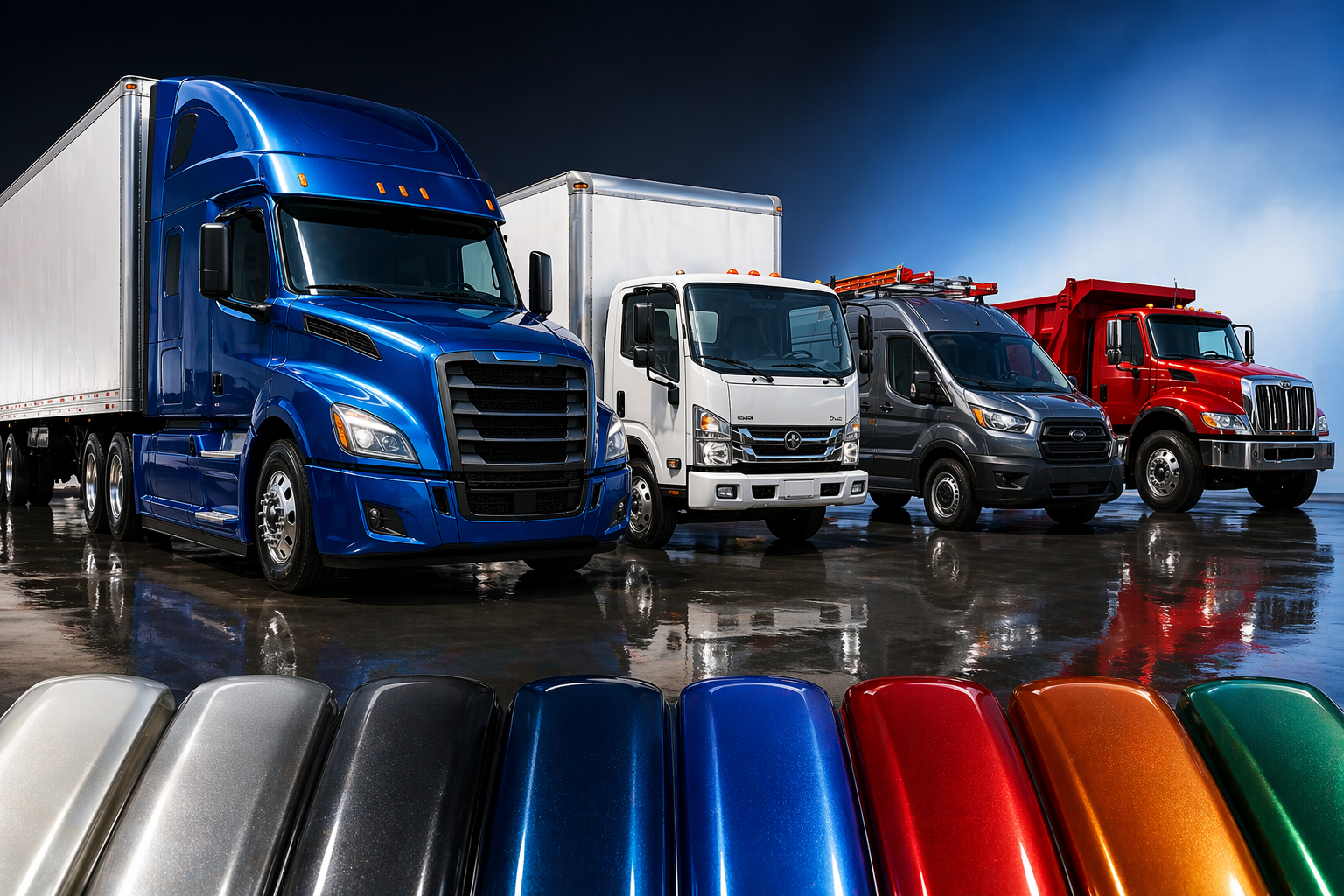
If you’re running a paint shop or managing a commercial fleet, August 2026 brings sweeping changes that could make your current processes non-compliant. New VOC regulations and electric vehicle requirements are forcing the entire industry to rethink paint formulations and application methods. Robotic paint systems can reduce material waste by up to 30% (source: industry automation studies).
Key Takeaways
- New VOC regulations effective August 2026 are forcing paint manufacturers to reformulate products with stricter emission limits
- Electric vehicles require specialised paint procedures to protect battery systems from damage during high-temperature curing processes
- Waterborne and low-temperature paints are becoming the industry standard, offering environmental benefits whilst protecting sensitive vehicle components
- Automation technology is addressing labour shortages in paint shops whilst delivering consistent quality and reduced waste
- Anti-corrosion advances are extending fleet lifespans, creating significant cost savings for vehicle operators
The commercial vehicle paint industry stands at a crossroads in 2026. Environmental regulations tighten their grip, electric vehicle fleets expand rapidly, and paint shops grapple with labour shortages whilst demanding higher quality standards. These converging forces are reshaping everything from paint formulations to application methods, creating both challenges and opportunities for fleet managers and paint shop owners.
What is Commercial Paint?
Commercial vehicle paint is a high-performance coating used on trucks, vans, and fleet vehicles, designed to provide durability, corrosion resistance, and compliance with environmental standards such as limits on Volatile Organic Compounds (VOCs).
New VOC Limits Transform Paint Formulations
What are VOCs (Volatile Organic Compounds)?
VOCs are chemicals that evaporate at room temperature and contribute to air pollution and health risks.
Environmental regulations are tightening significantly this year. The EU’s Regulation 2023/1464 introduces new formaldehyde emission limits for finished articles, taking effect on 6th August 2026 and directly impacting products sold in the EU and Northern Ireland. Meanwhile, the UK’s VOC limits for paints, originally introduced in 2005 and consolidated in 2012, are part of a broader regulatory landscape. While a specific review date of July 1st, 2026 for paint VOC limits is not explicitly confirmed, the UK REACH legislation debating and enactment is delayed until October 2026, signalling potential adjustments to environmental standards and offering a window for industry input.
These regulatory changes force paint manufacturers to completely rethink their formulations. Traditional solvent-based paints, long favoured for their durability and finish quality, can no longer meet the stringent emission requirements. Paint shops must adapt quickly or risk non-compliance penalties. IPS Paint has been developing compliant formulations that maintain performance standards whilst meeting these new environmental requirements.
The shift isn’t merely about compliance—it’s fundamentally changing paint chemistry. Manufacturers are investing heavily in research to develop formulations that deliver the same protective qualities and aesthetic appeal whilst dramatically reducing harmful emissions. This transformation requires paint shops to retrain staff, update equipment, and often modify their entire application processes.
Waterborne and Low-Temperature Solutions Rise
What is waterborne paint?
Waterborne paint is a type of coating that uses water as its primary solvent instead of chemicals, resulting in lower emissions of Volatile Organic Compounds (VOCs) while still providing effective coverage and durability for commercial vehicle applications.
The global trend accelerates towards low-VOC and sustainable coating solutions, leading to wider adoption of waterborne and powder-based technologies in commercial vehicle coatings. Water-based paints are increasingly replacing solvent-borne alternatives due to environmental awareness, offering significantly reduced volatile organic compounds. Their application characteristics, such as thinner layers, can also contribute to lighter vehicle weight.
1. Waterborne Paints Cut Emissions Through Thinner Application
Waterborne coatings deliver impressive environmental benefits. While the claim that these paints require thinner application layers compared to traditional solvent-based systems, reducing material usage by up to 30% needs further specific substantiation, robotic painting systems, which often utilize water-based paints, have been shown to reduce material consumption by up to 30%. The thinner application also contributes to weight reduction—a vital factor for commercial vehicles where every kilogram affects fuel efficiency and payload capacity.
However, waterborne systems demand different handling techniques. They’re more sensitive to humidity and temperature during application, requiring precise environmental controls. Paint shops must invest in climate control systems and train technicians in new application methods to achieve optimal results.
2. Low-Temperature Curing Protects Vehicle Components
Low-temperature cure coating systems are becoming vital for modern commercial vehicles. Traditional paint processes required curing at 140°C, but new formulations cure effectively at around 80°C—a significant reduction that prevents damage to lightweight materials like plastics increasingly used in vehicle construction.
This temperature reduction proves necessary for maintaining component integrity. Modern commercial vehicles incorporate numerous plastic components, electronic systems, and lightweight materials that simply cannot withstand traditional high-temperature curing processes without degradation or failure.
How to properly finish commercial vehicles.
Electric Vehicle Requirements Reshape Application Methods
Electric vehicles present unique challenges that traditional paint processes weren’t designed to address. The increasing prevalence of electric commercial vehicles forces paint shops to completely reconsider their approach to coating application and curing processes.
Key Challenges When Painting Electric Vehicles
- Battery temperature sensitivity
- Risk of thermal damage during curing
- Increased need for low-temperature coatings
- More complex masking and protection procedures
1. Battery Protection During Paint Processes
Electric vehicle batteries operate optimally between 15-45°C, and temperatures exceeding 50-60°C can accelerate cell wear or cause permanent damage, potentially voiding warranties. This creates a significant challenge for paint shops accustomed to high-temperature curing processes that routinely exceed these limits.
Paint shops must implement battery protection protocols during coating processes. This includes removing batteries before painting, implementing thermal barriers, or adopting low-temperature curing systems specifically designed for electric vehicle applications.
2. Specialised Procedures for EV Coating
Electric vehicles often utilise thinner, eco-friendlier paint systems such as water-based formulations that prove more sensitive during application and prone to minor scratches. This sensitivity demands more precise application techniques and controlled environments to achieve satisfactory results.
The specialised procedures extend beyond application to include enhanced surface preparation, precise environmental controls, and modified handling procedures throughout the painting process. These requirements increase process complexity but ensure optimal coating performance on electric vehicle platforms.
Automation Addresses Labour Shortages and Quality Demands
Automation and robotics become necessary components in paint finishing systems for 2026, driven by labour shortages and the need to handle complex part geometries. This technology extends beyond high-volume production environments to include low-volume paint shops facing staffing challenges.
Robotic Systems Reduce Waste and Improve Consistency
Robotic paint application systems deliver consistent coating quality, reduce overspray, and adapt to various parts and complex geometries. These systems significantly improve efficiency and quality whilst reducing material waste in commercial vehicle painting operations.
Modern robotic systems offer remarkable flexibility, programming to handle different vehicle types and coating requirements within the same production cycle. They maintain precise spray patterns, consistent application thickness, and optimal coverage even on complex curved surfaces that challenge manual application techniques.
The investment in robotic systems pays dividends through reduced material waste, improved quality consistency, and decreased labour dependency. Paint shops implementing automation report 20-30% reductions in material waste alongside significant improvements in finish quality and consistency.
| Change | Impact | Action Required |
|---|---|---|
| VOC Regulations | Lower emissions required | Switch to compliant paints |
| EV Growth | Heat-sensitive components | Use low-temp curing |
| Automation | Labour reduction | Invest in robotics |
Anti-Corrosion Technology Extends Fleet Lifespan
Advanced anti-corrosion technologies represent a significant breakthrough in commercial vehicle coatings. These innovations extend fleet lifespans considerably, creating substantial cost savings for vehicle operators through reduced replacement cycles and maintenance requirements.
Modern anti-corrosion formulations incorporate nanotechnology and advanced polymer chemistry to create superior barrier protection. These coatings penetrate deeper into metal substrates, creating multiple layers of protection against moisture, salt, and chemical exposure that commercial vehicles encounter daily.
The economic impact proves substantial. Extended vehicle lifespans reduce capital expenditure requirements whilst maintaining operational reliability. Fleet managers report significant cost savings through reduced corrosion-related maintenance and extended service intervals.
Paint Shops Must Adapt or Risk Falling Behind
The convergence of environmental regulations, new vehicle technologies, and automation requirements creates an imperative for paint shops to modernise rapidly. Those failing to adapt risk losing customers to competitors offering compliant, efficient, and high-quality services.
Successful adaptation requires strategic investment in new equipment, staff training, and process modification. Paint shops must evaluate their current capabilities against emerging requirements and develop implementation plans that maintain service quality whilst meeting new standards.
The most successful paint shops view these changes as opportunities rather than challenges. They invest in training, upgrade equipment systematically, and position themselves as experts in emerging technologies. This proactive approach secures their competitive position whilst building customer confidence in their capabilities.
What Paint Shops Should Do Now:
- Audit current paint systems
- Transition to waterborne coatings
- Invest in low-temperature curing
- Train staff on EV procedures
For commercial vehicle paint solutions that meet 2026’s evolving requirements, visit IPS Paint’s website to view their range of compliant coatings and expert application services.
Key Statistics
Commercial Vehicle Paint Industry Stats (2026):
- Waterborne coatings adoption increasing globally
- Robotic painting reduces waste by up to 30%
- Low-temp curing reduces energy use significantly
- EV fleets growing rapidly across UK and EU
FAQs: Commercial Vehicle Paint 2026
1. What are the new VOC regulations for commercial vehicle paint in 2026?
New regulations across the UK and EU are tightening limits on Volatile Organic Compounds (VOCs) in paints, requiring manufacturers and paint shops to switch to lower-emission, compliant formulations such as waterborne coatings.
2. Why do electric vehicles require different paint processes?
Electric vehicles use heat-sensitive battery systems that can be damaged by traditional high-temperature curing. This means paint shops must adopt low-temperature curing methods and specialised procedures to protect components during the coating process.
3. Are waterborne paints better than solvent-based paints?
Waterborne paints produce fewer emissions and help meet environmental regulations, while still delivering strong durability and finish quality when applied correctly. They are becoming the industry standard for modern commercial vehicle coatings.
4. How is automation changing commercial vehicle paint shops?
Automation, including robotic spray systems, is helping paint shops reduce waste, improve consistency, and address labour shortages by delivering precise and repeatable coating application across different vehicle types.
Colin Thomas, Fleet Protection Specialist at IPS Paint
Colin has over 20 years’ experience in commercial vehicle paint protection, working with fleet operators across Wales and the West to reduce maintenance costs through ceramic coatings and protective film solutions.
For a complete guide to fleet paint protection strategies, see our pillar article on coating methods: https://www.ipspaint.co.uk/commercial-vehicle-paint/what-are-the-best-coating-strategies-for-paint-protection-methods-to-prevent-fleet-damage/