
Why Commercial Vehicle Paint | South Wales Supplier Reveals Quality Standards
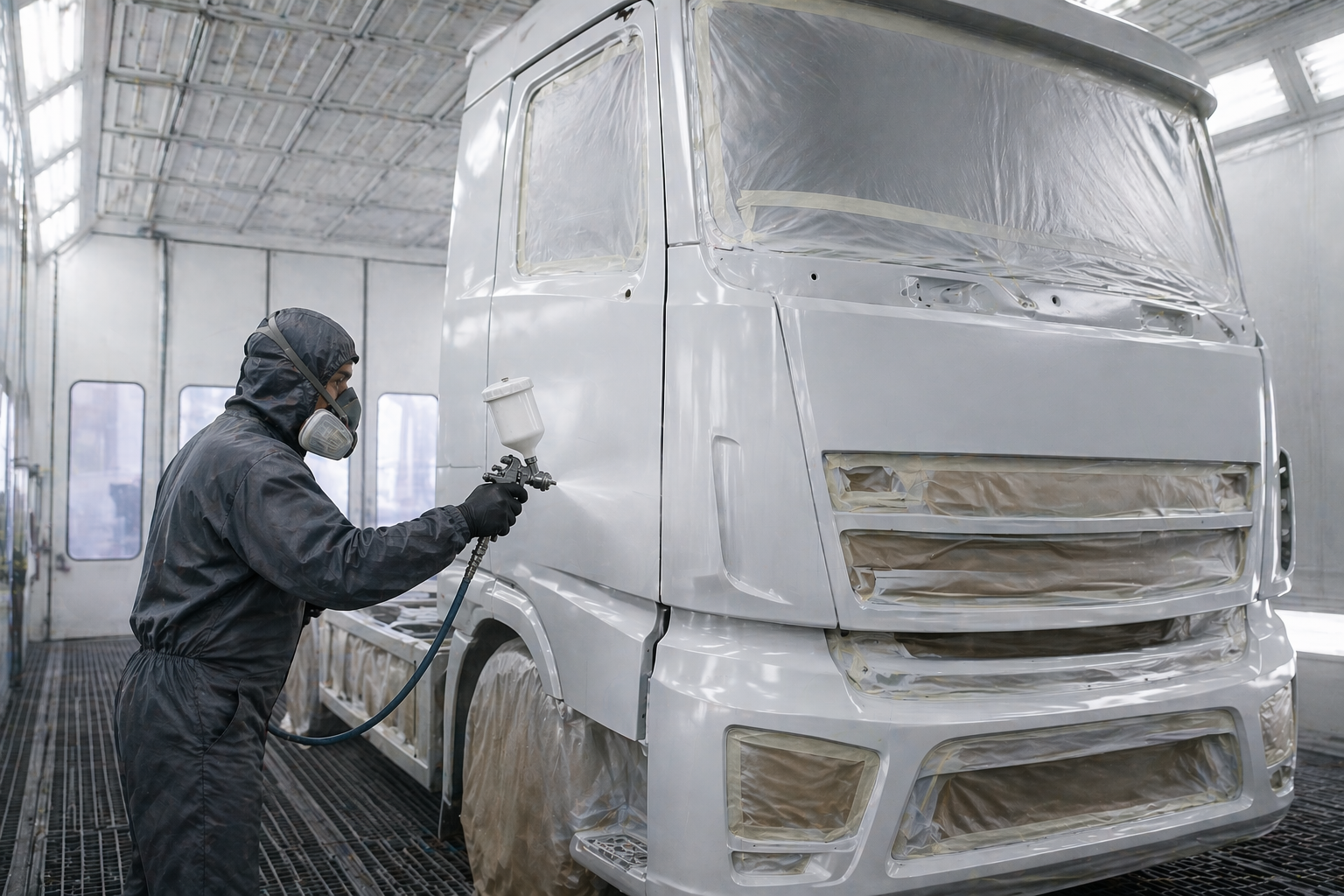
Most fleet operators don’t realise their commercial vehicle paint should last 5-10 years—but only if they’re meeting specific quality standards. What separates premium urethane coatings from standard paint, and why are UK regulations forcing suppliers to reformulate their products?
Key Takeaways
- Professional commercial vehicle paint systems typically last 5-10 years when applied correctly, providing substantial long-term value for fleet operators.
- UK VOC regulations shape modern paint formulations, with water-based paints achieving comparable durability to solvent-based systems whilst meeting environmental compliance.
- Urethane coatings deliver superior fleet protection through chemical resistance and anti-corrosive technology.
- International testing standards validate paint quality, ensuring commercial vehicle coatings meet rigorous performance benchmarks.
- Specialist suppliers like IPS Paint in South Wales provide commercial vehicle solutions with advanced colour matching services.
Commercial vehicle paint quality standards represent far more than aesthetic considerations. For fleet operators across the UK, paint systems serve as the first line of defence against corrosion, chemical exposure, and the relentless demands of commercial operations. Understanding these standards proves crucial for body shop owners seeking to deliver lasting value to their commercial clients.
What Is Commercial Vehicle Paint?
Commercial vehicle paint is a high-performance coating system designed to protect fleet vehicles from corrosion, chemical exposure, and mechanical wear while maintaining brand appearance.
Professional Paint Systems Typically Last 5-10 Years When Applied Correctly
A professionally applied commercial vehicle paint job delivers approximately 5-10 years of service life under proper conditions, with high-quality materials and diligent maintenance potentially extending this to 8-15+ years. This durability benchmark depends heavily on three critical factors:
- Paint quality, environmental exposure, and maintenance practices.
- Commercial vehicles face significantly harsher conditions than passenger cars, including constant loading and unloading, exposure to industrial chemicals.
- Extended periods in challenging weather conditions.
The longevity equation becomes particularly important when considering the total cost of ownership. Fleet operators calculate paint investment over the vehicle’s entire service life, making durability the primary consideration rather than initial cost. IPS Paint’s commercial vehicle solutions emphasise this long-term approach, offering high-performance coatings designed specifically for the demanding commercial environment.
Quality paint systems achieve their extended lifespan through advanced resin technology and proper application protocols. Modern commercial formulations incorporate UV stabilisers, corrosion inhibitors, and flexibility agents that maintain adhesion despite constant vibration and thermal cycling. These technological advances represent decades of development specifically targeting commercial vehicle requirements.
UK VOC Regulations Shape Modern Paint Formulations
The Volatile Organic Compounds in Paints, Varnishes and Vehicle Refinishing Products Regulations 2012 fundamentally transformed commercial vehicle paint formulations across the UK. These regulations establish strict limits on VOC content, driving innovation in water-based paint technology whilst maintaining the performance standards commercial operators demand.
Water-Based Paints Can Achieve Comparable Durability with Advanced Formulations
Modern water-based commercial vehicle paints can achieve comparable performance to traditional solvent-based systems through sophisticated polymer chemistry. Advanced acrylic and polyurethane water-based formulations now deliver similar durability, chemical resistance, and colour retention in many applications. This technological breakthrough allows commercial operators to meet environmental compliance without sacrificing protective performance, though solvent-based paints may still offer superior resistance in specific conditions like heavy rain or extreme humidity.
The transition to water-based systems required extensive reformulation to address commercial vehicle challenges. These paints must withstand diesel fuel exposure, hydraulic fluid contact, and aggressive cleaning chemicals whilst maintaining adhesion to various substrates. Contemporary water-based formulations incorporate specialised additives that provide these protective characteristics.
Compliance Requirements for Commercial Refinishing
Commercial vehicle refinishing operations must use compliant paint products that meet VOC content limits. While manufacturers and suppliers bear primary responsibility for ensuring products meet regulatory standards and proper labelling, maintaining records of compliant product usage represents good practice for demonstrating compliance. This regulatory framework extends beyond simple product selection to include application methods, spray booth efficiency, and waste management protocols.
The regulations also influence paint system selection for commercial operators. Fleet managers increasingly specify compliant coatings not only to meet current requirements but to future-proof against anticipated regulatory tightening. This forward-thinking approach drives demand for premium water-based systems that exceed current compliance thresholds.
Urethane Coatings Deliver Superior Fleet Protection
Urethane paint systems represent the gold standard for commercial vehicle protection, despite their higher initial cost. These coatings provide exceptional durability through cross-linked polymer networks that create virtually impermeable barriers against environmental attack. The chemistry behind urethane coatings explains their dominance in demanding commercial applications.
Chemical Resistance Prevents Premature Failure
Commercial vehicles encounter aggressive chemicals that rapidly degrade inferior paint systems. Diesel fuel, hydraulic oils, road salt, and industrial cleaning agents create a hostile environment requiring exceptional chemical resistance. Urethane coatings maintain their integrity when exposed to these substances, preventing substrate corrosion and premature paint system failure.
The cross-linked structure of cured urethane creates molecular barriers that resist chemical penetration. This resistance extends to both liquid chemicals and aggressive cleaning protocols commonly used in commercial vehicle maintenance. Fleet operators report significantly reduced touch-up and refinishing requirements when using quality urethane systems.
High-Build Properties Contribute to Robust Finish Quality
High-build urethane coatings provide superior coverage in fewer application passes, creating thicker protective films that better resist mechanical damage. This characteristic proves particularly valuable for commercial vehicles subject to constant loading impacts, stone chip damage, and minor abrasion. The film thickness provides an additional protection margin against environmental attack.
High-build properties also facilitate repair procedures by providing sufficient material thickness for localised sanding and refinishing. This capability reduces repair complexity and cost whilst maintaining aesthetic consistency across the vehicle. Commercial operators value this practical advantage in managing fleet appearance.
Anti-Corrosive Technology Extends Vehicle Life
Advanced urethane formulations incorporate sophisticated anti-corrosive additives that actively protect metal substrates. These technologies include zinc phosphate primers, corrosion-inhibiting pigments, and barrier-forming agents that prevent moisture and oxygen penetration. The result extends vehicle service life significantly beyond what standard paint systems achieve.
Anti-corrosive technology becomes particularly crucial for commercial vehicles operating in aggressive environments such as construction sites, coastal areas, or industrial facilities. The additional protection provided by premium urethane systems justifies their higher cost through extended vehicle life and reduced maintenance requirements.
Surface Preparation Determines Paint Performance
Surface preparation represents the foundation upon which paint system performance depends. Even premium urethane coatings fail when applied over inadequately prepared surfaces. Commercial vehicle refinishing demands meticulous preparation protocols that address contamination, corrosion, and substrate compatibility issues common in fleet operations.
Proper Cleaning Protocols Ensure Adhesion
Commercial vehicles accumulate complex contamination, including road grime, industrial chemicals, and maintenance residues that standard cleaning methods cannot remove. Professional preparation protocols employ staged cleaning using alkaline degreasers, solvent wipes, and specialised contamination removal techniques. This thorough approach ensures optimal paint adhesion and long-term performance.
The cleaning process must also address invisible contamination, such as silicone compounds from polishing products or release agents from manufacturing processes. These substances create adhesion problems that manifest as paint delamination months after application. Professional body shops employ specific detection and removal protocols for these problematic contaminants.
Compatible Paint Systems Prevent Compatibility Issues
Commercial vehicles often require refinishing over existing paint systems of unknown composition. Paint compatibility testing becomes necessary to prevent adhesion failures, lifting, or chemical reactions between coating layers. Professional refinishers maintain detailed records of paint systems and employ compatibility testing protocols before proceeding with major refinishing projects.
Modern paint system compatibility extends beyond simple adhesion to include thermal expansion characteristics, flexibility, and chemical resistance. Mismatched systems can create stress points that lead to premature failure despite proper application. This technical complexity reinforces the value of working with experienced commercial vehicle specialists.
Commercial Paint Balances Performance and Aesthetics
Commercial vehicle paint systems prioritise functional performance whilst maintaining professional appearance standards. This balance differs significantly from passenger car requirements, where aesthetic considerations often take precedence. Understanding these priorities guides appropriate paint system selection for commercial applications.
Mechanical Resistance Prioritised for Fleet Use
Commercial vehicles endure constant mechanical stress from loading operations, equipment mounting, and operational contact. Paint systems must resist chipping, scratching, and abrasion whilst maintaining protective integrity. This requirement drives selection toward harder, more durable formulations that may sacrifice some aesthetic properties for mechanical performance.
Mechanical resistance also includes flexibility requirements as commercial vehicles experience significant structural movement during operation. The paint system must accommodate this movement without cracking or delaminating. Modern commercial formulations incorporate flexibility agents that maintain adhesion despite ongoing substrate movement.
Brand Image Requirements Drive Quality Standards
Professional fleet operators maintain strict brand image standards that influence paint quality specifications. Consistent colour matching, gloss levels, and overall appearance contribute to corporate image and customer perception. These requirements often exceed purely functional considerations, driving demand for premium paint systems that deliver both performance and appearance.
Brand image considerations also influence maintenance protocols and refinishing schedules. Fleet operators invest in quality paint systems and regular maintenance to preserve professional appearance throughout the vehicle’s service life. This approach recognises paint as a marketing tool rather than merely a protective coating.
International Testing Standards Validate Paint Quality
Commercial vehicle paint quality relies on rigorous testing protocols that validate performance claims through standardised methodologies. These international standards provide objective measures of durability, resistance characteristics, and long-term performance that guide paint system selection for demanding commercial applications.
ASTM Standards Measure UV and Heat Resistance
ASTM D4587, G154, and G155 testing standards evaluate paint system resistance to ultraviolet radiation and thermal cycling that commercial vehicles encounter during extended outdoor service. These accelerated weathering tests simulate years of exposure in controlled laboratory conditions, providing reliable predictions of long-term colour stability and gloss retention.
Heat resistance testing becomes particularly important for commercial vehicles operating in high-temperature environments or equipped with heat-generating equipment. Paint systems must maintain protective properties and appearance when subjected to elevated temperatures that would cause inferior coatings to fail. ASTM testing protocols validate these critical performance characteristics.
Salt Spray Testing Confirms Corrosion Resistance
ASTM B117 salt spray testing provides a standardised evaluation of corrosion resistance for commercial vehicle paint systems. This accelerated corrosion test exposes coated panels to continuous salt spray conditions that simulate coastal environments or winter road salt exposure. Test results directly correlate with real-world corrosion protection performance.
Salt spray testing duration varies according to performance requirements, with commercial vehicle specifications typically demanding 500-1000 hours of exposure without substrate corrosion. These extended test periods reflect the demanding service conditions commercial vehicles face and the extended service life expectations of fleet operators.
South Wales Suppliers Provide Specialist Commercial Vehicle Solutions
South Wales represents a significant commercial vehicle hub with major logistics operations, manufacturing facilities, and transport corridors requiring specialised paint solutions. Regional suppliers like IPS Paint understand these local requirements and provide tailored services, including colour matching, technical support, and application guidance specific to commercial vehicle needs.
IPS Paint serves as an authorised supplier of premium commercial vehicle coating brands, including Sikkens, BASF, MIPA, HMG, and PPG. This brand portfolio ensures access to the latest paint technology and compatibility with existing fleet specifications. The company’s spectrometer-based colour matching service provides precise colour reproduction for maintaining fleet appearance standards.
The regional presence of specialist suppliers provides practical advantages, including rapid product availability, technical support, and understanding of local environmental conditions that influence paint performance. These factors contribute significantly to successful commercial vehicle refinishing outcomes and long-term customer satisfaction.
For commercial vehicle paint solutions and expert guidance on quality standards, visit IPS Paint at https://www.ipspaint.co.uk where their South Wales team provides specialised automotive and commercial coating services.
Summary
Commercial vehicle paint is a protective system designed to withstand harsh conditions and typically lasts 5–10 years when applied correctly. Modern coatings are shaped by UK regulations like the Volatile Organic Compounds in Paints Regulations 2012, with water-based paints now matching traditional performance.
Urethane coatings offer the best durability and resistance, but long-term results depend heavily on proper surface preparation. Quality is validated through standards from ASTM International, while suppliers in South Wales provide specialist solutions for fleet operators.
Frequently Asked Questions
How long does commercial vehicle paint last?
Commercial vehicle paint typically lasts 5–10 years when applied correctly, with premium systems—especially urethane coatings—lasting up to 15 years or more with proper maintenance.
What factors affect the lifespan of commercial vehicle paint?
The lifespan depends on three key factors:
- Paint quality and formulation
- Environmental exposure (weather, chemicals, UV)
- Maintenance and cleaning practices
What is the best type of paint for commercial vehicles?
Urethane coatings are widely considered the best option due to their durability, chemical resistance, and anti-corrosion properties, making them ideal for demanding commercial environments.
Are water-based paints as durable as solvent-based paints?
Modern water-based paints can achieve comparable durability to solvent-based systems thanks to advanced formulations, although solvent-based paints may still perform better in extreme conditions.
Why are VOC regulations important for commercial vehicle paint?
UK regulations such as the Volatile Organic Compounds in Paints Regulations 2012 limit harmful emissions, pushing manufacturers to develop environmentally compliant paints without compromising performance.
Sources
https://www.ppg.com/en-US
https://www.basf.com/gb/en
https://www.fleetnews.co.uk/
https://logistics.org.uk/campaigns
https://content.ampp.org/
https://materials-finishing.org/
Colin Thomas, Fleet Protection Specialist at IPS Paint
Colin has over 20 years’ experience in commercial vehicle paint protection, working with fleet operators across Wales and the West to reduce maintenance costs through ceramic coatings and protective film solutions.
For a complete guide to fleet paint protection strategies, see our pillar article on coating methods: https://www.ipspaint.co.uk/commercial-vehicle-paint/what-are-the-best-coating-strategies-for-paint-protection-methods-to-prevent-fleet-damage/