
Fleet Vehicle Colour Matching Explained: RAL & BS Paint Standards for Commercial Vehicles
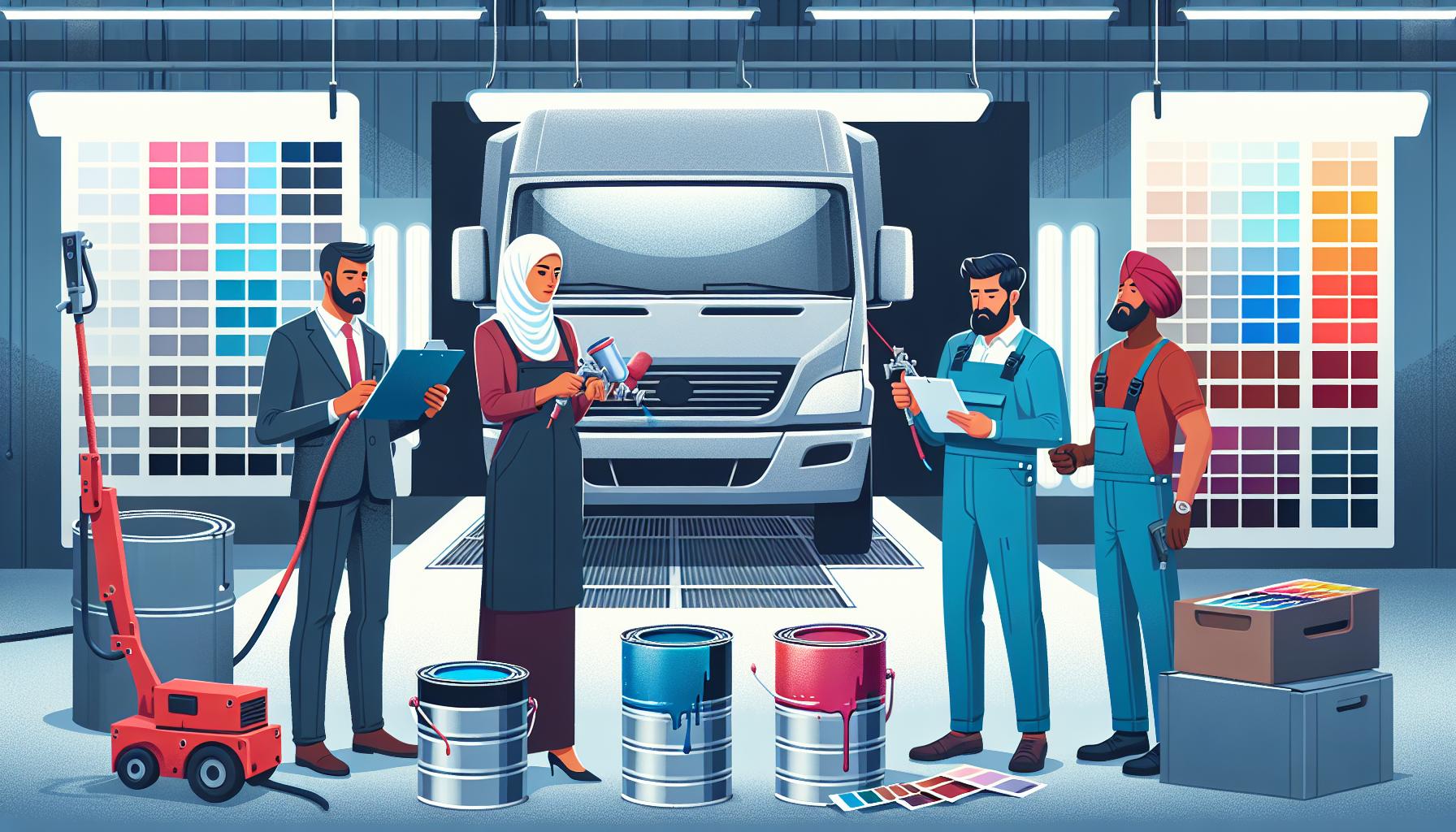
Understanding RAL & BS Paint Standards for Commercial Vehicles
Table of Contents
- Understanding RAL & BS Paint Standards for Commercial Vehicles
- How Colour Matching Impacts Fleet Brand Identity
- Common Myths About Vehicle Colour Matching
- Avoiding Mistakes in Fleet Vehicle Colour Matching
- The Technology Behind Precise Colour Matching
- Regulatory Requirements for Colour Matching in the UK
- Choosing the Right Paint Provider for Commercial Repairs
- Future Trends in Vehicle Colour Matching
Introduction
Achieving perfect colour matches for commercial and fleet vehicles is crucial for maintaining brand consistency and meeting regulatory standards. This guide explores the intricate processes and standards involved in fleet vehicle colour matching, focusing on RAL and BS paint standards that ensure uniformity across various materials and conditions.
Understanding RAL & BS Paint Standards for Commercial Vehicles
Colour matching is essential for fleet vehicles in the UK to sustain brand identity. A well-executed colour scheme acts as a mobile advertisement, increasing recognition and establishing trust. With a fleet representing a company’s image on the roads, uniformity in colour helps create a professional appearance and reinforces brand values consistently across all vehicles.
Maintaining consistent colour matching offers several key benefits:
- Enhanced Recognition: Uniform colours make fleets easily identifiable. Research indicates that this boosts customer recall by up to 80%.
- Professional Image and Trust: A cohesive fleet offers a sense of reliability and organisation, enhancing trust and differentiating businesses from their competitors.
- Marketing Efficiency: Vehicles acting as advertisements yield broad exposure, often surpassing traditional marketing methods.
In the UK, the implications of colour matching extend beyond branding to include legal compliance, particularly in sectors requiring specific colours, like emergency services. Distinct schemes ensure safe identification on roads. Commercial paint services ensure precise replication of corporate colours, often providing samples for verification to ensure adherence to intended colour specifications.
Many businesses have reported tangible improvements from diligent colour matching practices. For example, logistics firms using advanced colour matching have organised fleets around a signature colour, resulting in a 15% increase in customer inquiries and satisfaction rates. This illustrates how effective colour alignment significantly boosts a company’s visibility on busy UK motorways.
How Colour Matching Impacts Fleet Brand Identity
| Dimension of Brand Identity | Role of Colour Matching | Impact on Fleet Image and Brand | Risk When Matching Is Poor |
|---|---|---|---|
| Brand recognition and recall | Using the same, precisely matched shade on every vehicle reinforces a recognisable look. | Customers identify the fleet at a glance; colours act like a moving business card. | Inconsistent tones make vehicles look unrelated, weakening recognition and recall. |
| Professionalism and perceived quality | Tight colour control signals disciplined operations and attention to detail. | Fleet appears well managed and premium, supporting higher‑value contracts. | Mismatched panels suggest poor maintenance and corner‑cutting, undermining trust. |
| Consistency across locations | Matching to defined codes (e.g. RAL/BS) keeps colours uniform between regions and suppliers. | National fleets look like one coherent brand, not a patchwork of local variations. | Different depots produce visibly different shades, diluting a unified brand presence. |
| Alignment with brand guidelines | Accurate matching ensures vehicles reflect corporate colour standards and graphics. | Vehicles support wider marketing assets (signage, digital, print) with a single colour language. | Off‑shade vehicles clash with logos and marketing, making the brand look inconsistent. |
| Regulatory and safety colours | Correct use of specified colours supports visibility and compliance where required. | Emergency, utility or construction fleets are clearly identifiable and compliant. | Incorrect hues can reduce conspicuity and risk non‑compliance with sector standards. |
| Customer trust and reassurance | A uniform, colour‑consistent fleet reinforces reliability and stability. | Customers associate the consistent look with dependable service and brand strength. | Visible panel or vehicle‑to‑vehicle colour shifts raise doubts about investment and care. |
| Resale and residual value | Matching OEM or fleet colours cleanly supports remarketing and de‑branding. | Vehicles look “of a piece”, are easier to sell on, and support stronger residuals. | Patchy colour history makes units harder to sell and may require full repainting. |
| Operational simplicity | Documented codes and digital libraries simplify repeat repairs and new additions. | Faster turnround and fewer disputes between fleet, bodyshop and branding suppliers. | Time is lost chasing “near enough” matches and resolving complaints about visible differences. |
Common Myths About Vehicle Colour Matching
In vehicle repair, particularly colour matching, misconceptions can lead to costly mistakes. Understanding these myths is crucial for commercial vehicle repairers, car garages, and vehicle owners alike. Here are some common misconceptions about vehicle colour matching:
- Colour codes guarantee a perfect match: Colour codes provide a starting point but don’t ensure exact replication. Factors like sun exposure can alter paint shades over time, requiring digital spectrophotometers and blending techniques for accuracy.
- It’s impossible to match paint on older cars: Advances in colour-matching technology now allow repairs on vehicles of any age. Modern tools and techniques can replicate original colours of older models.
- All paints of the same name are identical: Variations exist within the same colour name due to differing formulas and application methods. Environmental differences also cause variations over time.
- Factory paint can be duplicated exactly: UV exposure and environmental factors prevent an exact match to factory finishes. Technicians often adjust toners to align new paint with the existing fade.
- A ‘close enough’ match under shop lights is acceptable: Mismatches become apparent under natural lighting. Precision in colour matching is imperative.
No standardised national guidelines for vehicle colour matching exist in the UK, but practices often involve recognised colour codes like RAL or Pantone, especially for fleet vehicles. Professional repair services using spectrophotometers are recommended over inadequate DIY kits that may result in mismatches.
Common Myths About Vehicle Colour Matching
Key Steps for Accurate Matching
To ensure flawless fleet vehicle colour matching, follow a structured approach:
- Locate the Paint Code: Find the manufacturer’s paint code in the vehicle’s door pillar, boot, or engine bay for accurate references.
- Use Technology for Precision: Employ a spectrophotometer to measure existing paint, providing compatibility with global databases.
- Match to Industry Standards: Compare colours against Pantone or RAL standards, ensuring alignment with guidelines like TfL’s specifications for fleet liveries.
- Test Under Controlled Lighting: Use a light booth to evaluate matches under different lighting conditions.
Common Mistakes to Avoid
Being aware of common pitfalls can prevent costly errors:
- Ignoring Material Differences: Each material reacts differently to paint; use compatible paints and proper blending techniques to ensure seamless transitions.
- Relying on Visual Matching Alone: Always use calibrated instruments to verify accuracy.
- Overlooking UK Regulations: Compliance with industry regulations, such as emergency vehicle visibility guidelines, is mandatory.
- Skipping Blending Techniques: Always blend new paint into adjacent panels for a consistent finish.
UK-Specific Standards and Tools
Several standards govern colour matching in the UK:
- TfL Livery Standard: Requires a white base with specific Pantone guidelines for graphics and fuel types.
- Emergency Vehicle Regulations: Mandate adherence to Department for Transport guidelines for visibility and safety.
- Professional Services: Consult professionals like Nexa Autocolor for fleet formulations or institutions such as the IMI for expert advice on colour mixing.
Avoiding Mistakes in Fleet Vehicle Colour Matching
The Technology Behind Precise Colour Matching
Achieving precise colour matching is crucial, particularly for fleet vehicles. Innovative technologies like handheld spectrophotometers and computerised mixing machines are at the forefront of this process.
Handheld spectrophotometers, also known as spectro colourimeters, shine controlled light onto a vehicle’s paint and measure the reflected light at various wavelengths, creating a unique “colour fingerprint”. Devices such as the Spies Hecker Color Dialog accommodate over 45,000 OEM colours, accounting for fading and resprays.
The data from spectrophotometers is processed through specialised software and systems, generating precise mixing formulas. Systems like Minimix/CustomMix offer features such as anti-drip valves, simplifying workflows for repair garages.
Supporting instruments like computerised mixing machines and colour cards ensure adherence to OEM specifications. This synergy of technology reduces downtime and ensures rapid and precise repairs. For custom or faded paints, technicians can interpret data effectively for optimal results.
The Technology Behind Precise Colour Matching
Understanding the Regulatory Landscape for Vehicle Colour in the UK
UK vehicle colour regulation focuses on visibility and safety rather than specific RAL or BS colour mandates. While there’s flexibility in colour selection, specific contexts like emergency vehicles may impose requirements.
One principal standard relating to vehicle colours is BS 381C, established in the 1930s. It includes colours commonly used in industrial applications, also applicable to vehicles, such as BS381C-101 (Sky Blue) and BS381C-537 (Signal Red).
While RAL is frequently utilised, it does not legally dictate vehicle colours like BS does. Repairers understanding RAL and BS systems benefit from conversion charts aiding in consistent repainting efforts. For bespoke applications, consultation with manufacturers and colour charts is crucial for compliance and consistency.
Regulatory Requirements for Colour Matching in the UK
Choosing the Right Paint Provider for Commercial Repairs
Selecting the appropriate paint supplier is crucial for ensuring high-quality repairs to commercial vehicles.
- Product Quality: Opt for suppliers offering durable paints known for OEM matching.
- Delivery Speed: Look for suppliers offering next-day delivery for urgent repairs.
- Range of Products: Ensure suppliers provide a comprehensive range of paints, including primers, basecoats, and clearcoats.
- Bulk Discounts: Consider suppliers offering bulk purchase options for cost savings.
- Customer Service: Responsive customer service enhances product selection and technical assistance.
Notable UK Suppliers
Some recommended suppliers include:
- BC Paints: Known for UK-manufactured products, offering over 10,000 colours and free UK-wide delivery.
- CC Paints: Specialises in OEM colours for major brands, with products focused on fleet vehicles.
- PPG Refinish: Provides next-day delivery options and a comprehensive range of refinishing systems to improve efficiency.
- Paint4Trade: Offers durable finishes ideal for buses and coaches, with UK-wide distribution.
Selection Tips
- Prioritise suppliers known for OEM matching and durability.
- Check delivery options to find the best provider for your needs.
- Inquire about bulk discounts to maximise cost-efficiency.
- Contact suppliers directly for personalised quotes and assistance.
Choosing the right paint supplier ensures repairs look professional and maintain the appearance of commercial vehicles.
Choosing the Right Paint Provider for Commercial Repairs
Emerging Trends in Vehicle Colour Matching Technologies
Vehicle colour matching and painting technologies are evolving, driven by paint formulation advancements, sustainability requirements, and consumer preferences for customisation. Waterborne paints and eco-coatings are becoming the new standard in the UK automotive industry.
A key trend is the shift to waterborne paint formulations, producing lower volatile organic compound (VOC) emissions. These formulations meet strict environmental regulations while maintaining colour-matching capabilities.
Manufacturers are also investing in aesthetic customisation technologies to cater to consumer demand for unique vehicles. Innovations such as metallic finishes, matte coatings, and pearlescent effects are gaining popularity, particularly in premium and electric vehicle segments.
Environmental sustainability drives these developments, with companies integrating bio-based and low-VOC resins into coatings. Staying informed about these trends allows commercial vehicle repairers to choose paint products that meet both aesthetic and environmental standards.
Future Trends in Vehicle Colour Matching
Understanding RAL and BS Paint Standards for Commercial Vehicles
In the UK, compliance with colour standards is essential for the repair and maintenance of commercial vehicles. RAL and BS paint systems provide frameworks for consistency and quality, particularly in fleet management and vehicle repairs.
RAL Paint Standards offer European-wide classification codes for precise colour matching. RAL Classic covers a wide array of colours, while RAL Design suits more nuanced applications. RAL paint often features high gloss and UV resistance, ideal for automotive finishes.
BS Standards, particularly BS 381C, are extensively used for industrial applications, providing a catalogue of colours for vehicle painting. BS 4800 covers a broader range of architectural applications but can apply to vehicle repairs for consistency.
When selecting paint, consider the durability. Many body shops opt for two-pack acrylic enamels or alkyd synthetics, blending RAL and BS systems to maintain uniformity and adherence to regulatory standards. Quick dispatch options in RAL or BS formats are available for repair professionals.
Adhering to RAL or BS standards ensures fleet maintenance and compliance with safety regulations. Repairers can use BS to RAL converters for perfect colour matching.
Sources
- IPS Paint – The Importance of Accurate Colour Matching
- Tailor Made Online – Consistent Branding for Fleet Vehicles
- Wrapmates – Fleet Branding: The Power of Consistent Design
- Body Matters UK – Common Car Paint Myths Debunked
- ChipsAway – Car Colours to Avoid and Why
- IPS Paint – The Art of Perfect Colour Matching for Commercial Vehicle Fleets
- Transport for London – Support Vehicle Livery Standard
- PPG Fleet Watch – Colour Solutions