
Silicone-Free Valeting Products: Are They Bodyshop-Safe? IPS Paint Explains
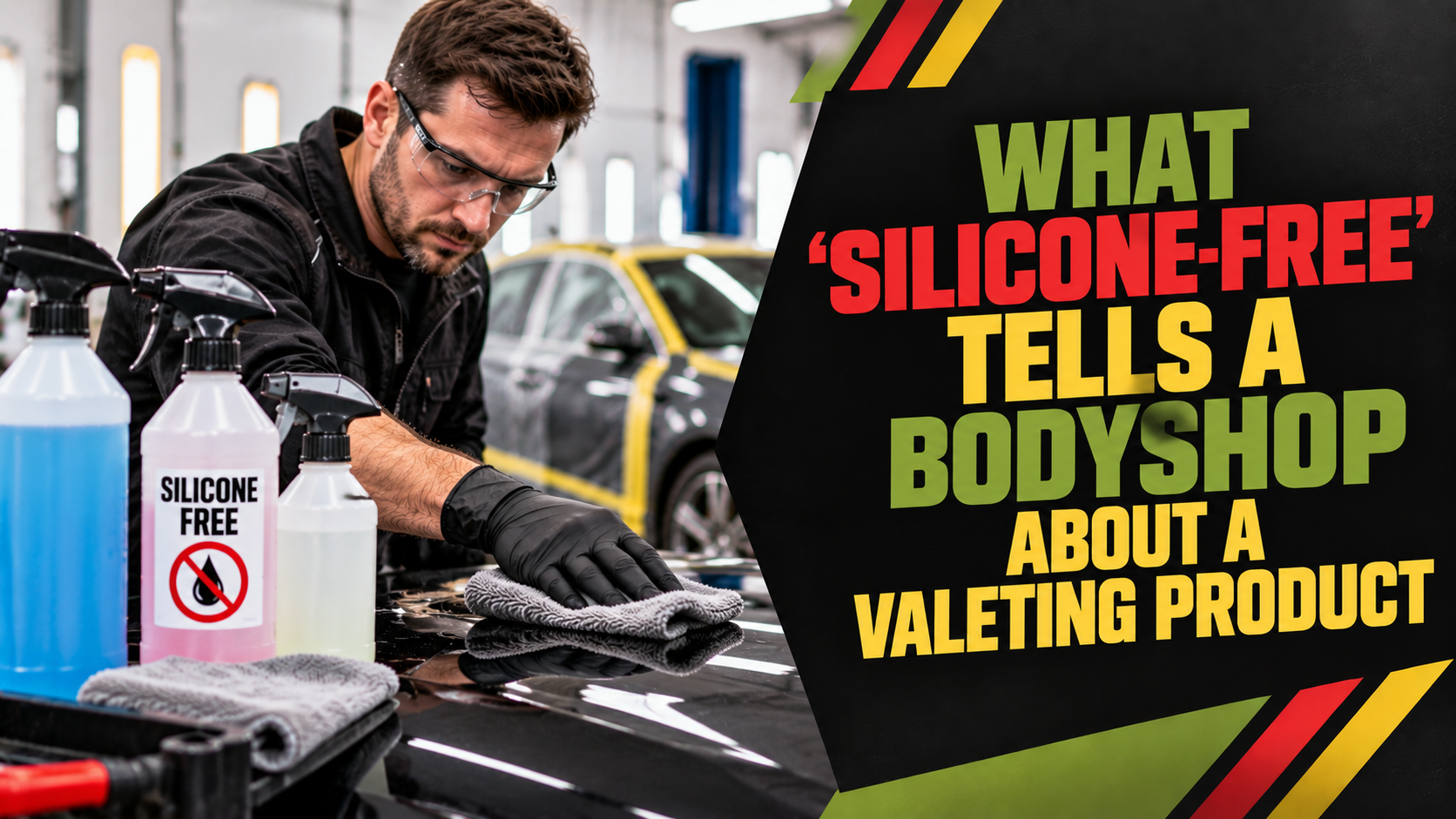
One overlooked bottle of hand cream or tyre shine could ruin an entire panel – silicone contamination can strike at concentrations too small to see or feel. Does “silicone-free” on the label actually protect your bodyshop? The answer isn’t as simple as you’d think.
Key Takeaways
- A silicone-free label describes one formulation characteristic, not a guarantee that a product suits every surface, repair stage or spray environment.
- Silicone contamination can contribute to paint defects such as fisheyes or craters, and the contamination may not become obvious until the refinishing process is underway.
- Everyday items such as hand creams, tyre shines and waxes can carry silicone into a bodyshop without anyone realising, so tools, cloths, hands and bottles all need checking.
- Silicone-free valeting options are a starting point, but shops still need to confirm approved use through technical data sheets and their own zone policies.
- Separating tools and zones, watching for cross-contact, and following the paint system’s own prep steps matter just as much as the product label – the full picture is worth reading before restocking the valet bay.
Refinish work depends on a clean, predictable surface, and few things undo that faster than an invisible trace of silicone drifting in from a valeting bottle. Bodyshop managers already know to check for “silicone-free” on cleaning and detailing products, but that single phrase can hide more questions than it answers. This piece looks at what the term really covers, where the risks still hide, and how a shop can build habits that protect every panel that passes through the workshop.
Why ‘Silicone-Free’ Isn’t the Whole Answer
A bottle marked “silicone-free” is telling a shop one thing only: that particular formulation does not contain silicone. It says nothing about whether the product suits a prep area, a spray booth, or a finished vehicle waiting for collection. Bodyshops often need a different approach to valeting than a general valet bay, because materials used to dress tyres, polish paint or finish trim move between vehicles and work areas, carrying risk with them if contamination reaches a surface destined for paint.
Reading the label is a useful first filter, not the final word. The manufacturer’s technical and safety data will usually spell out intended use, and that detail matters more than the headline claim on the front of the bottle. Silicone-free valeting options built with bodyshop use in mind, available from IPS Paint, give refinish teams a sensible starting point for building a shortlist rather than a finished answer. From there, matching each product to its actual task, and getting confirmation where any doubt remains, is what turns a promising label into a safe choice.
Autoglym maintains a dedicated professional bodyshop/silicone-free range, which supports the distinction between general valeting and products intended for silicone-free environments. https://www.autoglym.com/professional/
How Silicone Wrecks a Paint Finish
Fisheyes, craters and lost adhesion
Contamination on a surface being prepared or refinished can interfere with the coating process and lead to defects such as fisheyes, craters or cissing. For a bodyshop, the practical concern is that contamination introduced through products, tools or working practices can result in avoidable rework. Prevention therefore starts with controlling what enters preparation and refinishing areas and following the paint system manufacturer’s cleaning and preparation instructions.
Why contamination is often invisible
Contamination may not be obvious during preparation and can be transferred through products, tools, cloths, hands or working practices. That can make the source difficult to identify once a paint defect appears. Preventing cross-contact and controlling which products and equipment enter preparation and refinishing areas is therefore more reliable than trying to identify contamination after a problem occurs.
Everyday Products That Sneak Silicone In
Silicone contamination rarely arrives through an obviously labelled product. It tends to sneak in through ordinary items that nobody thinks twice about, including:
- Hand creams and barrier creams used by staff throughout the day
- Deodorants and personal care products worn into the workshop
- Lubricating sprays kept near tools and equipment
- Tyre shine, waxes and polishes from the detailing side of the business
- Vinyl and leather rejuvenators used on interiors
Any one of these can transfer silicone onto hands, cloths or tools, and from there onto a panel waiting for paint. The risk is often greatest where a detail department sits close to the spray environment, since cleaners used in one part of the shop can easily find their way into the other.
Reading Labels the Right Way
Checking technical and safety data
The front label is a starting point, but the manufacturer’s technical or application information should be checked for intended use, surface compatibility and any restrictions relevant to a bodyshop environment. The safety data sheet provides important information about hazards, handling and appropriate controls. Where the product’s suitability for a preparation or refinishing area remains unclear, confirm it with the supplier or manufacturer before use.
Matching products to prep, refinish or finished zones
Not every silicone-free product belongs everywhere in the shop, and treating them as interchangeable is a common misstep. A dressing suitable for a finished vehicle heading back to the customer may still be unsuitable near a panel mid-repair, simply because of how and where it gets applied. Working out which products belong in preparation zones, which are fine for refinishing areas, and which should stay reserved for completed vehicles gives staff a clear reference point rather than a guessing game each time a job comes through.
Stopping Cross-Contamination on the Shop Floor
Separating tools and work areas
Where practical, keeping tools and work areas separate is one of the simplest ways to cut contamination risk. Distinct sets of wash mitts, towels and brushes for different zones of a vehicle, and different areas of the shop, reduce the chance that dirt or residue from one job finds its way onto another. This kind of separation does not need elaborate systems, but it does need consistency, since a single shared cloth can undo weeks of careful practice.
Watching hands, cloths and overspray
Before applying any dressing or polish, it is worth pausing to consider what sits nearby. Adjacent paintwork, overspray drifting from another bay, or simple transfer from a worker’s hands can all carry silicone onto a surface that was otherwise clean. Cloths deserve particular attention, since a silicone-free product used with a contaminated cloth has not solved the transfer problem at all; the state of the whole working process matters, not just the bottle in hand.
Following the paint system’s own prep steps
Every paint system comes with its own cleaning and preparation instructions, and these should take priority before any coating or refinishing step begins. Skipping or shortening these steps because a product claims to be silicone-free removes an important safety net, since the prep stage exists to catch contamination that might otherwise slip through. Following the system’s guidance consistently, rather than treating it as optional, keeps the whole process aligned with what the paint manufacturer actually expects.
Handling Cleaning Chemicals Safely
Silicone is not the only concern with valeting chemicals; many cleaning and degreasing substances used in this work can be harmful if handled carelessly. Skin irritation, narcotic effects from inhaling fumes, and flammability are all recognised risks with certain products, according to regulatory guidance on valeting practices. Concentrations can run high when products are used inside a vehicle’s cabin, so good ventilation matters as much as the product choice itself. Protective clothing, including eye protection and gloves suited to the specific chemical, helps prevent direct skin and eye contact and should be treated as standard practice rather than an afterthought. This gives access to HSE’s specific COSHH sheets, including SR17 for valeting with solvent-based products.
HSE specifically covers skin/eye contact, mist and vapour, flammability, ventilation and appropriate PPE in vehicle valeting.
Building a Purchasing List That Specifies Approved Use
A purchasing list that simply notes “silicone-free” against a product name leaves too much unanswered for a busy refinish shop. A stronger approach records the approved application alongside each item, so staff know at a glance whether something belongs in the prep bay, the refinish area, or the valet bay for finished vehicles. This kind of detail turns a purchasing list into a working reference document rather than a static inventory, and it pays off whenever a new team member needs to make a quick decision about what to reach for. A practical way to begin building that list is to browse silicone-free valeting products designed with bodyshop compatibility in mind, then cross-check each one against its technical data before it earns a permanent place on the shelf.
Silicone-Free Is a Starting Point, Not a Guarantee
Treating “silicone-free” as a screening question rather than a final answer keeps expectations realistic and protects the finishes that leave the workshop. The label narrows the field, but genuine safety comes from checking technical data, separating zones and tools, watching for cross-contact, and following the paint system’s own preparation steps every time. None of these steps guarantees a fisheye-free result on their own, but together they build a working process that gives every panel the best possible chance. As a practical next step, reviewing bodyshop-safe valeting products against the shop’s own zone policy is a sensible way to put these habits into practice.