
Silicone-Free Label Not Enough? IPS Paint on Post-Repair Polish Choice
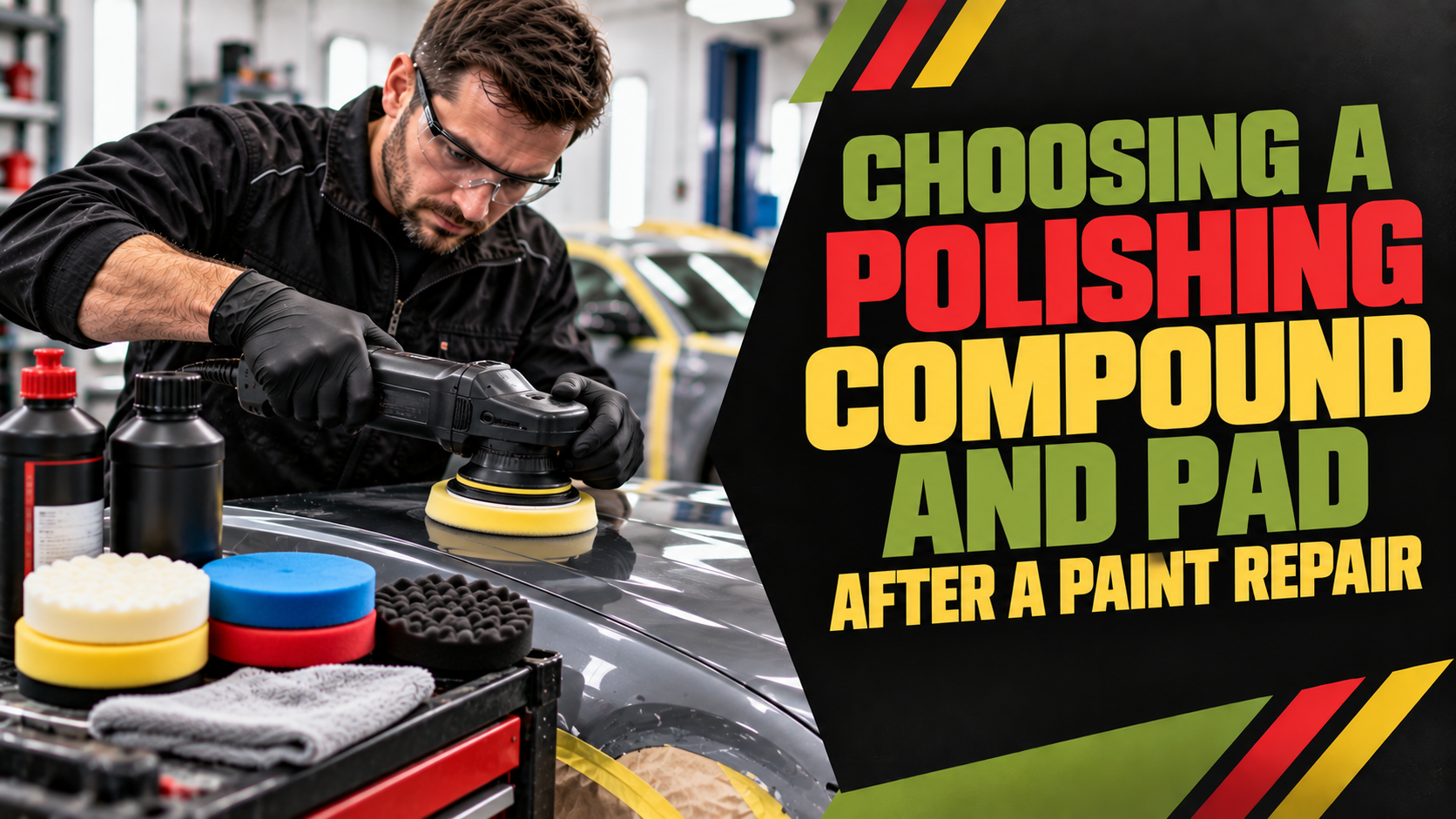
A “silicone-free” label is useful when selecting products for a bodyshop, but it does not automatically confirm that a product is suitable for every surface, repair stage or refinishing area. Product choice, working zones, tools and contamination controls all need to be considered.
Key Takeaways
- A silicone-free label confirms one formulation characteristic, not that a compound or pad suits a specific surface, repair stage, or spray environment
- Silicone contamination can cause fish-eyes and adhesion failure, and it often travels invisibly through contaminated cloths, hands, or airborne fluids
- Refinish shops reduce costly rework by checking technical and safety data sheets rather than relying on packaging claims alone
- A purchasing list should state the approved application for a product rather than relying on the words silicone-free
- Separating tools, zones, and applicators for prep areas versus finished vehicles is one of the workflow habits covered here
A polish tub marked “silicone-free” looks like a safe bet for any bodyshop. Yet that single word on a label answers only one question, and a refinish shop manager juggling multiple vehicles, technicians, and deadlines needs answers to several more before a compound or pad goes anywhere near fresh paintwork.
Why ‘Silicone-Free’ Is Only Half the Answer
“Silicone-free” describes a formulation characteristic. It tells a buyer that a particular ingredient has been left out, which is a useful first screening question when stocking a bodyshop rather than a general valet bay. What it does not confirm is that a cleaner, polish, or dressing suits every surface, every stage of a repair, or every spray environment a vehicle might pass through on its way to a finished job. Silicone Free Options.
This distinction matters because bodyshops carry a different risk profile from a standalone valet operation. Materials used to dress tyres, polish paintwork, or finish interior trim often move between vehicles and work areas, and contamination reaching a surface prepped for paint leads to costly rework rather than a quick fix. A clear policy on products, tools, and work zones closes that gap in a way a single label claim cannot.
For shops working through a shortlist of silicone-free options, IPS Paint’s range of polishing and valeting products provides a practical starting point, provided each product is then matched to its actual task rather than chosen on label wording alone. The condition of the whole working process matters as much as the bottle itself: a silicone-free product used with a contaminated cloth has not solved the transfer problem at all.
How Silicone Wrecks a Fresh Repair
Silicone causes disproportionate damage for such a small contaminant, which is why bodyshops treat it with more caution than almost any other substance on site.
Fish-Eyes and Adhesion Failure Explained
Contamination on a surface being prepared or refinished can interfere with the way a coating behaves and may contribute to defects such as fish-eyes, craters or cissing. For a bodyshop, the practical concern is that contamination introduced through products, tools or working practices can result in avoidable rework. Prevention therefore starts with controlling what enters preparation and refinishing areas and following the paint system manufacturer’s cleaning and preparation instructions.
Hidden Sources: Cloths, Hands and Airborne Fluids
Contamination can be transferred between jobs and work areas through products, cloths, applicators, tools and workers’ hands. A silicone-free product used with a contaminated cloth has not removed that risk.
This is why bodyshops should consider the whole working process rather than relying on the product label alone. Where practical, identify which products and tools may enter preparation or refinishing zones, which are reserved for finished vehicles, and how reusable cloths and applicators are stored.
Reading Past the Label
Once the risks are clear, the next step is building a habit of checking further than the front of the bottle before anything reaches a repair panel.
Check Technical and Safety Data First
Check the manufacturer’s technical or application information for intended use, application method, surface compatibility and relevant restrictions. The safety data sheet provides important information about hazards, handling and appropriate controls. Where suitability for a preparation or refinishing area remains unclear, confirm it with the supplier or manufacturer before use.
Match the Product to the Actual Task
A product being silicone-free does not automatically mean it suits the job at hand. A dressing formulated for finished trim is a different proposition from a compound intended for cutting back a repaired panel, even if both carry the same reassuring label claim. Where a label leaves any doubt about intended use, contacting the manufacturer directly for confirmation is a small step that avoids a much larger problem later on.
Building a Contamination-Proof Workflow
Product selection only solves part of the puzzle. The workflow surrounding those products decides whether contamination actually reaches a repair.
Separate Zones, Tools and Applicators
Separating areas and tools where practical is one of the simplest habits to introduce. Deciding which products may enter preparation or refinishing zones, which are reserved strictly for finished vehicles, and how reusable cloths and applicators get stored between uses removes much of the guesswork that leads to accidental cross-contamination.
Watch Overspray and Adjacent Paintwork
Before applying any dressing, it is worth pausing to consider adjacent paintwork, the direction overspray might travel, and the risk of transfer to a worker’s hands during the process itself. Interior parts treated with silicone-based release agents can feel noticeably oily and prove genuinely difficult to clean from plastic trim, which raises the contamination risk considerably if that trim sits anywhere near an open repair area.
Follow the Paint System’s Own Prep Steps
Every paint system comes with its own cleaning and preparation instructions, and these take priority over general good practice whenever the two appear to conflict. Following those steps before coating or refinishing a surface keeps the whole job aligned with what the paint manufacturer has actually tested and approved, rather than relying on shop habit alone.
State the Approved Application, Not Just ‘Silicone-Free’
The clearest fix for all of this sits in how a purchasing list gets written in the first place. A line item reading “silicone-free polish” leaves too much to interpretation, whereas a line stating the approved application, surface type, and repair stage removes ambiguity for whoever picks the product off the shelf on a busy morning. That small change in wording turns a vague screening filter into a specification technicians can trust.
Writing purchasing lists this way also makes staff training simpler, since new team members can see at a glance which products belong in which zone rather than relying on memory or word of mouth. For a shop wanting to review its current shortlist against this standard, browsing IPS Paint’s polishing compounds and pads is a sensible way to check that each product’s approved use lines up with where it actually gets used on the shop floor.