
Interior Cleaners: IPS Paint Picks Products by Surface, Not “Universal” Labels
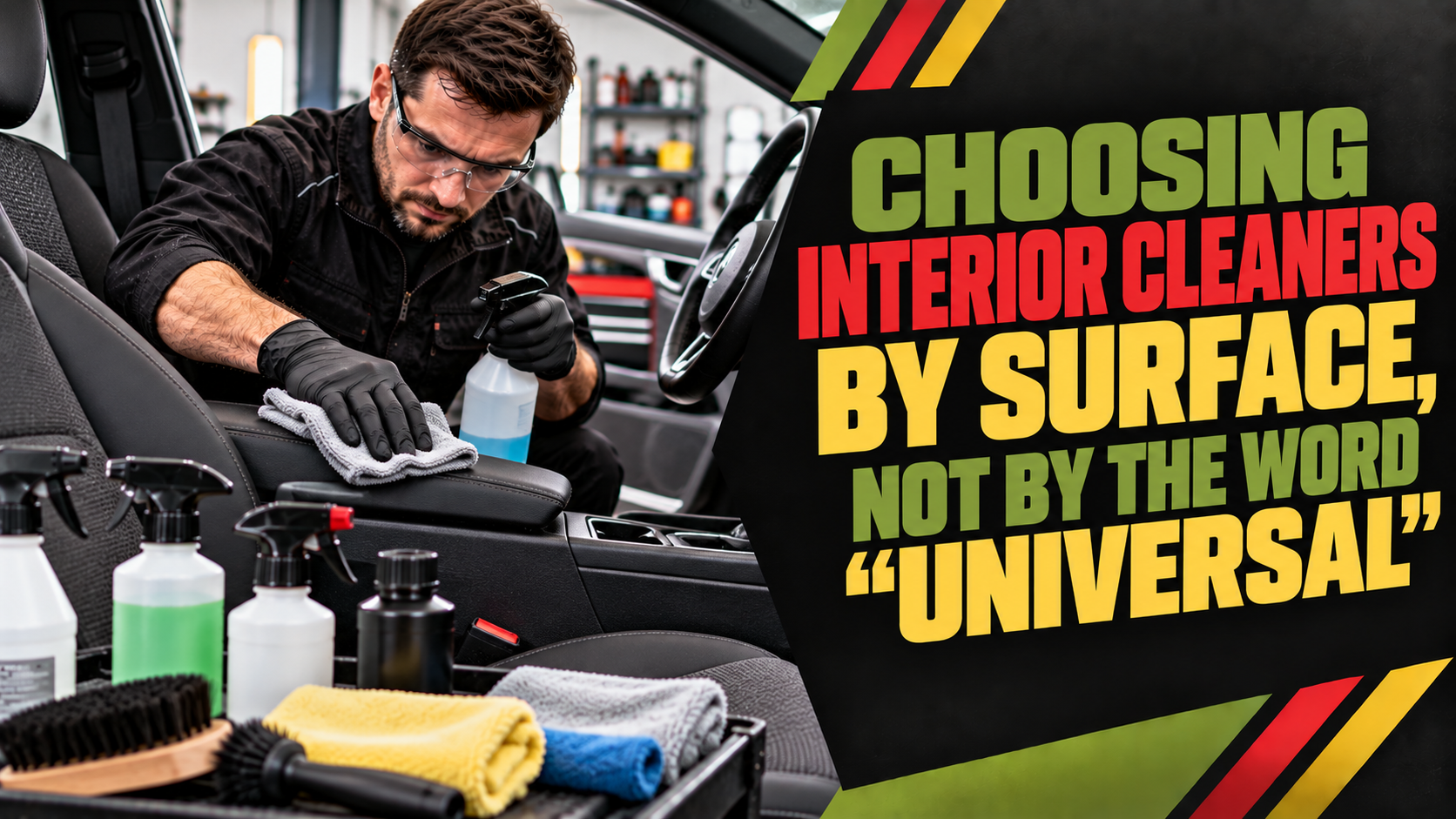
A vehicle interior combines several different materials, and a cleaner suitable for one surface may not be approved for another. Identify the material first, then choose the cleaning method and product according to the surface, type of soil and manufacturer’s instructions.
Key Takeaways
- Choose an interior cleaner according to the material and type of soil rather than relying on the word “universal”.
- Check the vehicle manufacturer’s care guidance and the cleaner’s approved surfaces before use.
- Test colourfastness or finish in an inconspicuous area where the product instructions direct you to do so.
- Keep cleaners away from displays, switches and openings unless the vehicle and product instructions allow their use there.
- If a cleaner changes the colour, texture or gloss of a surface, stop and reassess before continuing.A car interior is never really one surface. Leather, woven fabric, moulded plastic and glass all sit side by side on a dashboard, yet they behave in completely different ways when a cleaning chemical touches them. Reaching for a single “universal” spray might feel quicker, but it often asks one formula to do a job that really needs three or four separate products.
Why ‘Universal’ Cleaners Fall Short
Automotive interiors are built from a genuine mix of materials, each with its own chemistry and its own weak points. A cleaner strong enough to shift ingrained grime from a plastic door card can be far too aggressive for stitched leather bolsters sitting just inches away. Marketing a product as all-purpose does not change what happens when that formula meets a different surface; it simply means the manufacturer is hoping one blend will be gentle enough for some jobs and strong enough for others at the same time.
Many all-purpose cleaners carry a notably high pH to help them cut through dirt on tougher surfaces, and that same strength can damage more delicate materials, particularly on older vehicles or certain plastics. Household cleaners make the problem worse again: ammonia-based glass sprays can discolour tinted windows, and bleach-based products have no place anywhere near upholstery. IPS Paint approaches interior care by treating each surface as its own task rather than a single problem to solve with one product.
A properly cleaned interior should come out looking factory fresh rather than greasy or artificially glossy, and that finish is far easier to achieve with products balanced for the specific material being treated. Chasing a one-bottle shortcut tends to trade that natural finish for streaks, residue or long-term surface damage.
The Risks of One Bottle for Everything
Treating every surface the same way does not just risk a poor finish on the day; it can shorten the working life of the materials themselves. Each surface type carries its own set of warning signs worth knowing before a cleaner is chosen.
Identify the Surface Before Choosing the Cleaner
Modern interiors can combine fabric, coated leather, suede-like upholstery, plastics, screens and shiny trim within a small area. The same spill or patch of dirt may therefore affect more than one material.
Identify the surface first and remove loose debris without grinding it into the material. Check the vehicle manufacturer’s care instructions alongside the cleaner’s label or technical information before deciding how to treat it.
A “multi-purpose” or “universal” description can help create a shortlist, but it does not confirm that the cleaner is approved for every material it may touch.
Match the Method to the Material
Different interior materials may require different products and cleaning methods, so use confirmed compatibility rather than assuming one process applies throughout the cabin.
For textile and Alcantara applications, manufacturer instructions can include specific requirements for colourfastness testing and how an area should be treated. SONAX’s Upholstery & Alcantara Cleaner, for example, instructs users to test colourfastness in an inconspicuous area and, where appropriate, treat a complete section rather than concentrating only on a small spot.
Those instructions apply to that particular product. Leather, delicate coatings, screens and other interior surfaces may require different methods, so check the relevant vehicle and product guidance before cleaning.
Applying Products the Right Way
Choosing the correct cleaner only solves half the problem; application technique accounts for a lot of the difference between a finish that looks professional and one that looks rushed.
Towel-First, Not Spray-Direct
Spraying a cleaner directly onto a dashboard or door card invites overspray, and that excess liquid can seep into vents, seams and electronics where it causes staining or longer-term faults. Applying the product to a microfibre towel or detailing brush first, then wiping the surface, gives far more control and avoids oversaturating any one spot. Reaching for a household towel instead of a proper microfibre cloth is a common shortcut that causes its own damage, since coarser fabric can push dirt around the surface and leave fine scratches on glossy plastics or touchscreens.
Dilution, Dwell Time and Pretesting
Correct dilution and dwell time matter just as much indoors as they do for any exterior pre-wash product, and the same discipline applies: pretest on an inconspicuous area where the manufacturer recommends it, follow the stated dilution ratio for the application equipment being used, and never let a product dry on the surface before wiping it away. These small habits protect against the chemical residue and surface marking that rushed application tends to leave behind.
Apply Carefully and Know When to Stop
Apply the cleaner in the amount and with the cloth, brush or other method specified by the manufacturer. Keep chemicals away from displays, switches and openings unless the product and vehicle instructions explicitly allow their use.
Where directed, test colourfastness or finish in an inconspicuous area before continuing. If the cleaner begins to change the colour, texture or gloss of the material, stop and reassess rather than continuing across the surface.
Avoid soaking a seat simply because a stain has not lifted on the first pass. Finish with a clean cloth as directed and allow appropriate drying time before returning the vehicle to its owner.
Surface-Specific Cleaning Protects Every Material
Treating leather, fabric, plastic and glass as four separate jobs rather than one continuous task keeps a vehicle’s interior looking genuinely well cared for rather than simply clean on the surface. The small extra effort of choosing the right product for each material pays back in materials that last longer and a finish that holds up between details rather than fading within days.
For anyone building or refreshing a detailing kit, starting with a focused set of surface-specific interior cleaners makes it far easier to match the right formula to the material actually being worked on.</content> IPS Paint approaches interior care by treating each surface as its own task rather than a single problem to solve with one product. it’ negation-pivot sentence into affirmative phrasing where flagged”, “Confirmed markdown subset compliance: only specified ## headings and preserved ### subheadings”, “Verified no new facts, figures, or named third parties were introduced beyond source material”, “Checked key takeaways for restricted phrases and removed ‘IPS Paint’s’ possessive to stay within mention budget”]