
Essential Equipment for Commercial Body Shops: Spray Guns, Compressors & More
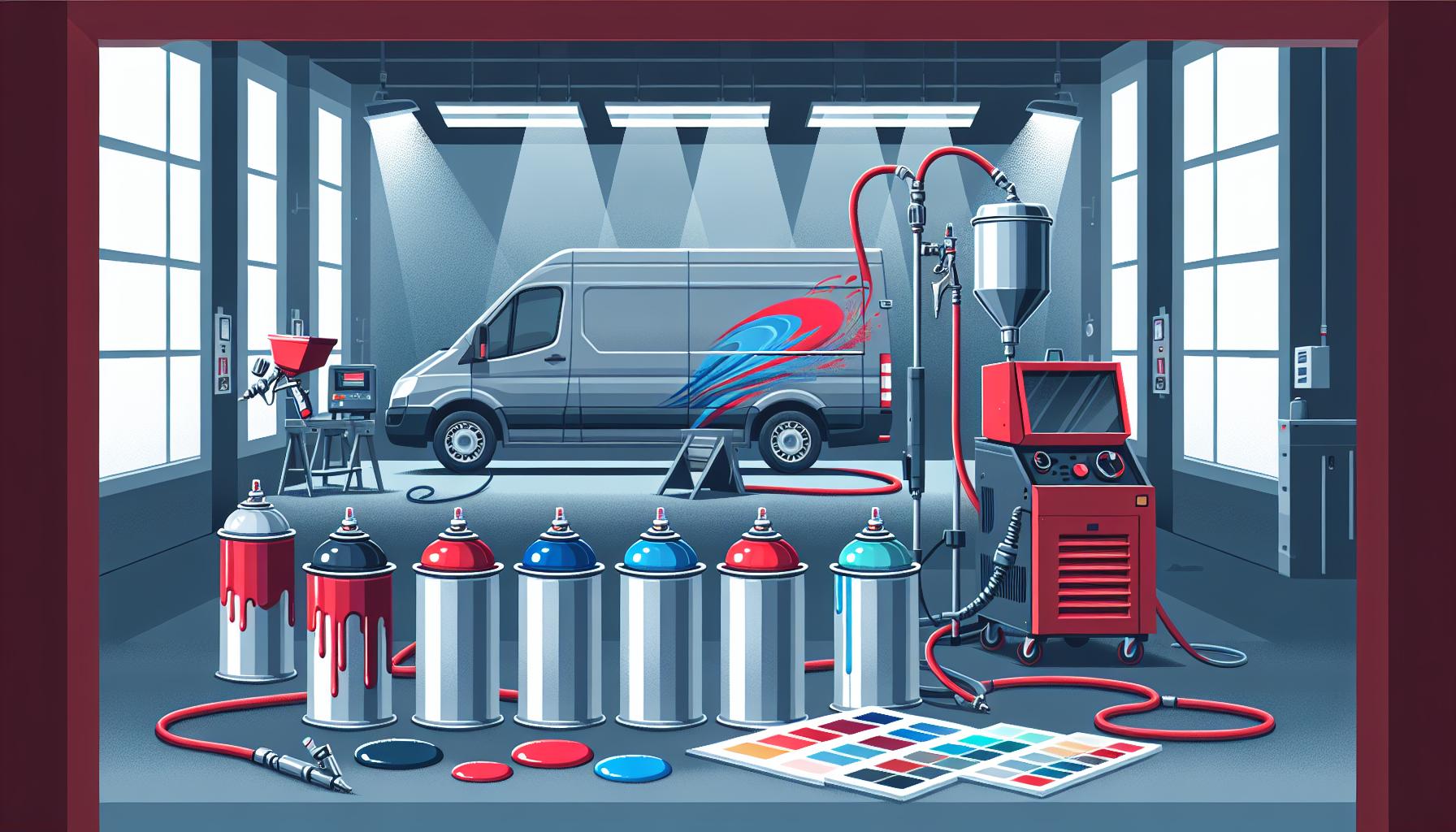
Understanding Spray Guns: Essential Types and Uses
Table of Contents
- Understanding Spray Guns: Essential Types and Uses
- Compressors Demystified: Choosing the Right Power Source
- Accessory Tools: Their Role in a Body Shop
- Future-Proofing: Trends in Paint and Repair Technology
- Avoid These Mistakes: Common Errors in Spray Gun Setup
- Maximizing Efficiency: Comparing Paint Booth Technologies
- Safety First: Selecting Proper Protective Gear
- Investment Return: Cost-Benefit Analysis of Equipment Choices
Introduction
Equipping a commercial body shop demands strategic choices about spray guns, compressors, and accessory tools to maintain high standards in vehicle repair. This blog post guides vehicle repairers in selecting and utilizing the essential equipment to optimise their operations.
Understanding Spray Guns: Essential Types and Uses
Choosing the right compressor for your spray gun is crucial for achieving optimal results in vehicle repairs. In the UK, understanding your spray gun’s specifications is the first step toward selecting an appropriate compressor. Key factors include free air delivery (FAD) measured in CFM (cubic feet per minute) and PSI (pound-force per square inch). It’s recommended that the compressor’s output exceeds your spray gun’s requirements by at least 20-50% to prevent pressure drops during use.
Matching Compressor Specifications
Begin by identifying your spray gun’s specifications. Different spray guns have varying requirements:
- HVLP (High Volume Low Pressure): 8–20 CFM, ideal PSI 20–30, suitable for automotive finishes and furniture.
- LVLP (Low Volume Low Pressure): 3–8 CFM, ideal PSI 10–20, excellent for DIY projects and small touch-ups.
- Conventional: 8–20+ CFM, ideal PSI 30–50, best for general industrial use and faster coverage.
The compressor’s capacity is critical. Calculate the displacement CFM to find the FAD—usually about two-thirds of the displacement. For example, if a compressor has a displacement of 12 CFM, the effective FAD is around 8 CFM, which should meet or exceed your spray gun’s requirements at 90 PSI.
Compressor Size and Features
The tank size and horsepower significantly affect the duty cycle and performance:
- For small jobs or panels: Select a compressor around 50L with 2HP providing 6-7 CFM.
- For full car resprays or larger projects: Go for 200L+, 4HP+, delivering 12-18 CFM.
- If using multiple tools: Calculate total CFM needs and increase by 1.5 times.
Attention should also be paid to the quality of hoses and connectors. A minimum inner diameter of 3/8 inch (8mm) with quick-release fittings will enhance air delivery to the spray gun, ensuring consistent performance without interruptions. Additionally, incorporating moisture filters and adjustable regulators can further aid in maintaining air quality, preventing issues like pulsing and poor surface finishes.
Compressors Demystified: Choosing the Right Power Source
| Power source type | Typical use cases | Key advantages | Main limitations | When it is the “right” choice |
|---|---|---|---|---|
| Mains electric (single‑phase 110–240 V) | Home garages, small bodyshops, light spraying and air tools | Convenient plug‑in use, relatively quiet, low running cost, easy to maintain | Limited motor size and CFM, may struggle with high‑demand HVLP guns or continuous use | Best where you have standard domestic power and mainly do intermittent work or small–medium jobs. |
| Mains electric (three‑phase industrial) | Professional bodyshops, continuous production, multiple bays | High, stable power for large compressors, excellent CFM, efficient for long duty cycles | Requires industrial electrical supply and installation, higher upfront cost | Best for commercial shops needing continuous air for multiple spray guns and tools all day. |
| Petrol engine compressor | Mobile repair, on‑site work, remote locations without grid power | Completely independent of mains, good portability, can deliver high CFM in the field | Exhaust fumes, higher noise, fuel cost, outdoor‑only or very well‑ventilated use | Best when you must work away from buildings or power sockets and still need serious air output. |
| Diesel engine compressor | Heavy mobile operations, construction, fleet and commercial work | Very robust, fuel‑efficient at high loads, suitable for large tow‑behind units | High purchase price, heavy, noisy, emissions to manage | Best for large mobile setups where compressors run for many hours powering big air demands. |
| Battery / cordless compressor | Quick tyre inflation, light trim tools, emergency jobs | Ultra‑portable, no cords or fuel, instant setup, good for light tasks | Very limited CFM and run‑time, unsuitable for spray painting or continuous air tools | Best for small jobs and support tasks, not for refinishing or high‑flow spray equipment. |
Essential Accessory Tools in a Body Shop
A well-equipped body shop relies on various accessory tools to ensure precision and quality in vehicle repairs. Understanding the role of these tools can significantly enhance efficiency and effectiveness.
Air Hoses
Air hoses connect directly to compressors and are essential for operating pneumatic tools like grinders, sanders, and spray guns. The right air hose can improve air flow and pressure, ensuring consistent tool performance.
Paint Booths
Paint booths create dust-free environments crucial for achieving high-quality finishes. They enhance the efficiency of spray gun applications and comply with UK health and safety regulations. Paint booths control airflow and temperature, allowing better paint adhesion and reduced contamination.
Paint Mixing Systems
Accurate colour matching is vital in vehicle repairs, and paint mixing systems streamline this process. These systems allow precise mixing of paints, ensuring seamless colour matching across different vehicle parts, enhancing professionalism.
Other Important Tools
- Body Repair Kits: Include hydraulic rams and attachments for effective dent pulling and panel shaping.
- Hammer and Dolly Sets: Essential for dent repair and metal shaping, available in various sizes for versatility.
- Grinders and Sanders: Available in air, electric, or orbital models for stripping paint and grinding welds.
- Welding Equipment: MIG welders are vital for bodywork and exhaust repairs.
- Workshop Tools: Comprehensive toolboxes with essentials like spanners, torque wrenches, and screwdrivers.
Utilising high-quality accessories and tools not only enhances repair standards but also significantly improves workflow, guaranteeing the satisfaction of both repairers and clients.
Accessory Tools: Their Role in a Body Shop
Current Trends in Vehicle Repair Technology in the UK
The landscape of vehicle repair technology is evolving rapidly in the UK, driven by advancements in artificial intelligence (AI), telematics, and the increasing complexity of automotive systems, especially pertaining to electric vehicles (EVs). Understanding these trends is crucial for commercial vehicle repairers and garages to enhance their repair processes.
- AI and Digital Damage Assessment: AI technologies are revolutionising damage assessment through image analysis, streamlining inspection processes and reducing human error.
- Predictive Maintenance: Leveraging telematics and sensor data, predictive maintenance enables garages to identify potential issues before they lead to failures.
- ADAS and Sensor Repairs: With the implementation of advanced driver-assistance systems (ADAS), even minor collisions can necessitate complex recalibration.
- Electric Vehicle Specialisation: The surging popularity of EVs demands specialised repair services for their unique components and technology.
- Automation and Data Integration: Automation plays a critical role in improving efficiency within repair workflows by linking repairers, insurers, and parts suppliers.
These trends shape how body shops select equipment and implement processes, emphasising the need for ongoing education and adaptation in the industry.
Future-Proofing: Trends in Paint and Repair Technology
When aiming for superior paint application in commercial body shops, awareness of common errors in spray gun setup is crucial. Many issues can lead to subpar finishes, yet awareness and preventive measures can help achieve that professional look.
Key Errors and Their Solutions
- Incorrect Air Pressure: Using too high air pressure causes overspray and material loss; too low results in poor atomisation. Adjust accordingly, maintaining a distance of 6-8 inches from the surface.
- Clogged or Damaged Nozzles: Clogs create uneven patterns. Regularly clean air holes and inspect the nozzle and air cap for damage.
- Loose Fluid Nozzle: Sputtering or fluid leaks occur from insecure components. Ensure connections are tight and seals are in good condition.
- Improper Spray Distance: Optimal distance is between 8-12 inches for even distribution.
- Incorrect Fluid Tip Size: Using a mismatched tip affects application. Refer to the Technical Data Sheet for the correct size.
- Maintenance Oversights: Routine disassembly for cleaning and replacing damaged components is essential for maintaining performance.
Regular maintenance, including cleaning filters and adhering to paint guidelines, is paramount in preventing common spray gun issues. Prior surface preparation also significantly affects finish quality.
Avoid These Mistakes: Common Errors in Spray Gun Setup
Essential Equipment for Commercial Body Shops
Commercial body shops in the UK rely on a comprehensive range of equipment to deliver high-quality vehicle repair and finishing services. Understanding the various types of equipment and their functions is crucial for both efficiency and professionalism.
Major Equipment
A spray booth is vital, providing a controlled environment for applying paint, thus preventing contamination and ensuring a smooth finish. A spray gun is fundamental for evenly applying paint. Depending on the paint type, different spray guns may be required, such as HVLP guns, which reduce overspray and improve transfer efficiency.
Air compressors are indispensable in commercial body shops, powering spray guns, pneumatic tools, and some drying systems. Opt for reliable models with low noise levels and features like anti-vibration technology to enhance comfort during extended use.
Body Repair and Shaping Tools
A well-rounded body repair kit is essential, typically containing various tools for dent repair and shaping. Specialty tools like heat lamps help reduce paint drying times, increasing productivity.
Support Systems
To maintain a clean working environment, dust extraction units are crucial for capturing residues from sanding operations. Paint dryers can significantly accelerate curing times, and blow guns are useful for cleaning surfaces and post-paint drying tasks.
By equipping shops with these essential tools and systems, body shop owners can meet industry standards and provide high-quality repairs that satisfy customer expectations.
Maximizing Efficiency: Comparing Paint Booth Technologies
Essential Safety Gear in Body Shops
In any body shop, technician safety is paramount. Proper personal protective equipment (PPE) safeguards health and enhances productivity. Understanding specific safety gear requirements is crucial.
Required Personal Protective Equipment
Essential PPE for body shop technicians includes:
- Respiratory Protection: FFP2 masks may be necessary, especially in spray painting operations.
- Clothing: Use Type 5 disposable overalls to prevent contamination.
- Foot Protection: Safety footwear with an S3 rating reduces slip and fall risks.
- Head Protection: Helmets or bump caps prevent injury in hazardous areas.
- Hand Protection: Gloves should be worn to protect against hazardous substances.
Regulatory Framework
Adhering to health and safety regulations is fundamental. Compliance with the Health and Safety Executive standards and the British Standard BS 10125:2022 ensures safe vehicle body repair operations.
Safety First: Selecting Proper Protective Gear
Key Paint Products for Commercial Body Shops
Choosing paint products for commercial body shops requires consideration of quality and performance. Different applications require specific paints and finishes tailored to the vehicle being repaired.
Leading Suppliers and Their Offerings
- HMG Paints: Specialises in high-performance coatings for commercial vehicles, buses, and industrial applications.
- Granville Supplies: Provides a comprehensive range of professional solutions for commercial vehicle refinish.
- PPG Refinish Distribution: Offers efficient delivery and high-quality automotive and commercial paint products.
- Independent Paint Supplies: Focuses on a variety of paint solutions suitable for automotive, commercial, and marine applications.
These suppliers provide paints and offer valuable support in colour matching and product selection, crucial for achieving high-quality finishes in commercial body shop applications.
Investment Return: Cost-Benefit Analysis of Equipment Choices
Choosing the Right Paint Products for Vehicle Repairs
Selecting the right paint products is crucial for achieving a professional finish. In the UK, several brands stand out for their quality and ease of use, catering to both DIY enthusiasts and professional garages.
Top Aerosol Options for Quick Repairs
Aerosol sprays are popular for quick touch-ups due to their convenience. Standout options include:
- Halfords Spray Paint 300ml: Best overall for colour matching and application.
- Hycote Double Acrylic 150ml: Offers good colour match and damage resistance.
- Hammerite Smooth Metal Paint 400ml: Easy to apply on rusty surfaces without a primer.
Professional and Specialist Paints for Larger Repairs
For extensive repairs, using professional-grade paint yields superior results:
- R-M Paints: Known for premium automotive refinish lines and eco-friendly options.
- Paintman Coach Enamel: Hand-mixed paint for cars and classics, available in custom finishes.
- Craftmaster Paints: Specialises in traditional coach enamels and various coatings.
Key Considerations for UK Buyers
When selecting paint products, consider:
- Availability: Brands like Halfords and Hycote offer immediate access.
- Application: Aerosols are ideal for small fixes; professional paints require more setup.
- Match Accuracy: Use the Vehicle Identification Number (VIN) or paint code for matching.
- Durability: Use primers and clear coats for longevity and protection.
- Testing: Test on scrap material to check compatibility.
Sources
- Spray Guns Direct – How to Choose the Correct Air Compressor for My Spray Gun
- Pickmore – Spray Painting Compressors: A Complete Guide
- Spraygun Shop – Buyer’s Guide: Compressors
- Infratech Solutions – Essential Car Body Shop Equipment
- MyToolShed – Automotive Tools
- Max Protect – Essential Equipment for Professional Car Repair
- Solera – 5 Vehicle Claims Tech Trends to Watch in 2026
- IBISWorld – Motor Vehicle Maintenance & Repair