
Aluminium Oxide vs Silicon Carbide vs Ceramic: Abrasive Grains Compared
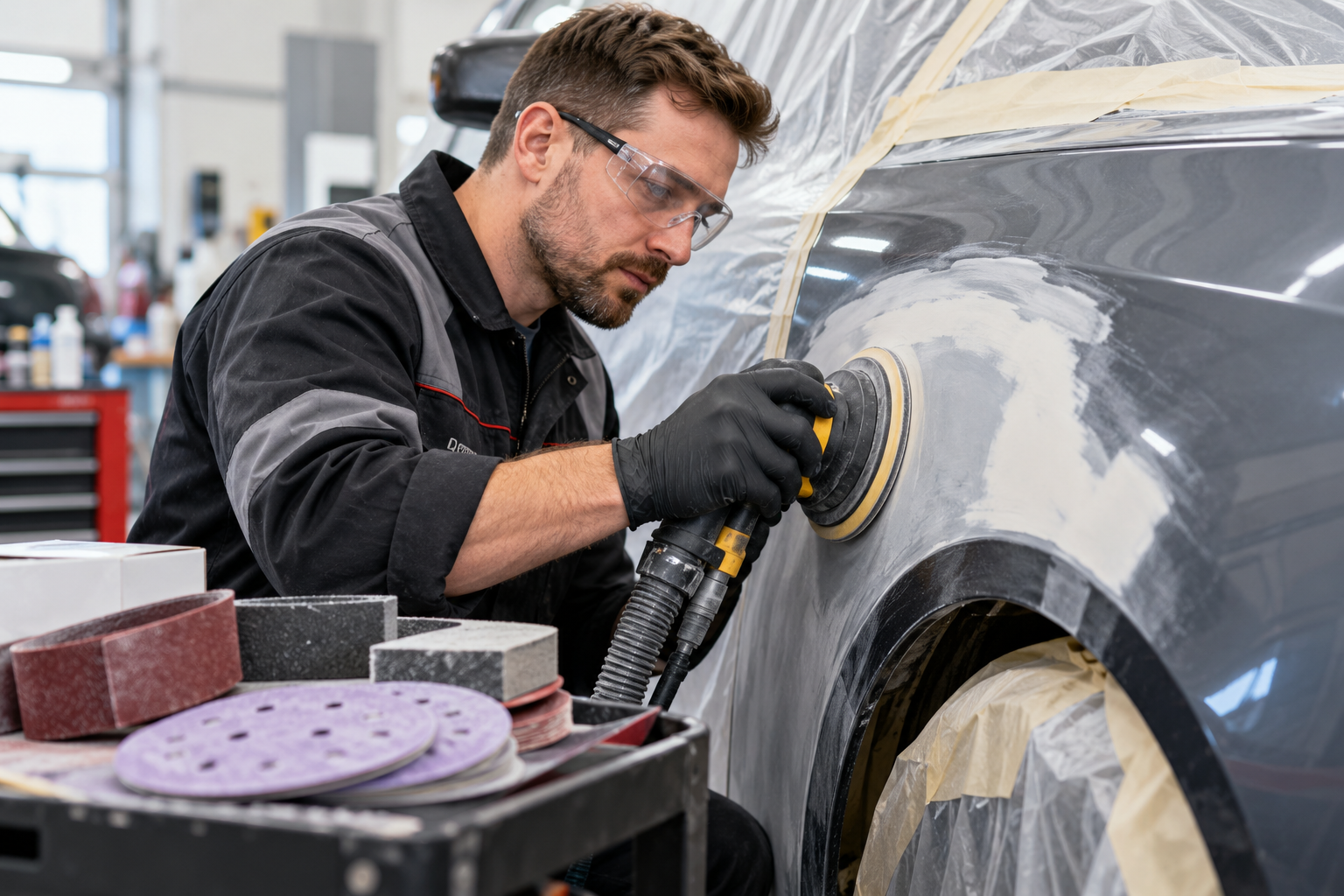
Think ceramic always outperforms aluminium oxide or silicon carbide? Bodyshop reality is messier. Learn why grain name alone can’t tell you which abrasive belongs on filler, primer or clearcoat, and what actually determines performance panel by panel.
Key Takeaways
- Picking the right abrasive grain depends on the sanding stage, the grit, the backing and the coating structure, not the grain’s name alone
- Aluminium oxide works as a sharp, tough, general-purpose grain, but its real performance depends on the grade and construction of the product it’s built into
- Silicon carbide is harder and more regular in shape than aluminium oxide and not as brittle, which makes it a common choice for wet sanding clearcoat and finishing work
- Ceramic grains are engineered to fracture and expose fresh cutting edges, but this doesn’t guarantee longer life on every job
- Technicians should check technical data sheets and trial new abrasives under controlled conditions before switching grain types mid-process
Walk into any bodyshop’s abrasives cupboard and the shelves tell a story: dozens of discs, sheets and belts, each labelled with a grain name and a grit number. It’s tempting to treat those names like a simple hierarchy, as though ceramic always beats silicon carbide, which always beats aluminium oxide. Real-world sanding works differently, and choosing on name alone can leave a technician with the wrong tool for the stage in front of them.
Why Grain Name Alone Won’t Cut It
A sanding product is far more than its grit number or the mineral printed on the back. The abrasive grain, the backing material, the coating structure and the overall product design all combine to decide how a disc or sheet actually performs on the panel. Two products using the same grain can behave completely differently once backing flexibility, coat density and anti-loading treatments are factored in.
This matters because bodyshop work moves through distinct stages, each with its own demands. Shaping filler, keying primer and finishing clearcoat all call for different cutting characteristics, and no single grain type handles every one of them equally well. Aluminium oxide, silicon carbide and ceramic grains are common across abrasive product ranges, but understanding the differences between them helps technicians specify correctly rather than guess.
The practical upshot is straightforward: treat grain type as one input among several, not the whole decision. Grit, backing format, coating style and compatibility with the sanding tool and extraction system all deserve equal weight before a product reaches the panel.
Aluminium Oxide: Sharp, Tough, General-Purpose
Aluminium oxide remains one of the most widely used abrasive grains in bodyshop work, and for good reason. It’s commonly described as sharp and tough enough to handle a broad range of general sanding applications, from mild steel preparation to paint stripping. Its durability under pressure makes it a dependable workhorse for tasks that don’t demand a specialised finish.
That said, performance varies by grade and construction. An aluminium oxide disc built for heavy metalwork will behave very differently from one designed for lighter featheredging, even though both share the same core mineral. The material being worked on also plays a part, since mild steel, filler and old paint layers all respond differently to the same grain. For general-purpose paint removal and metal sanding, aluminium oxide remains a sensible default, but the specific product grade still needs matching to the job.
Silicon Carbide: Finer Finish, More Brittle
Silicon carbide grains have a different physical structure from aluminium oxide. Compared with aluminium oxide, silicon carbide is more regular in shape and not as brittle, which allows it to cut cleanly through tougher or harder substrates, including glass, stone, non-ferrous metals, plastics and fibreglass. That more regular shape can also produce a finer surface finish in certain applications, which is part of why it turns up so often in intermediate sanding stages.
Suitability still depends on the specific product and substrate, so technicians shouldn’t assume every silicon carbide abrasive suits the same automotive task. In wet sanding of clearcoat, lacquer and hard plastics, silicon carbide paired with waterproof paper or film is a standard combination because finish quality matters most at that stage. Checking the wet/dry rating, scratch consistency and clogging resistance of a specific product remains the safer approach before assuming performance.
Ceramic Grain: Engineered for Demanding Jobs
Ceramic abrasive grains sit at the more specialised end of the range, built for demanding sanding and grinding applications where consistent cutting performance under heavy use matters most. Some engineered ceramic grains are designed to fracture at a microscopic level as they wear, continually exposing fresh cutting edges rather than dulling evenly like a conventional grain.
That self-sharpening behaviour is a genuine product-design feature, but it’s worth being clear-eyed about what it does and doesn’t promise. Fracturing to expose new edges doesn’t guarantee a ceramic abrasive will outlast every alternative on every repair; outcomes still depend on the specific product construction, the grade and how it’s matched to the task at hand. Ceramic grains tend to earn their keep on heavier material removal and tougher metalworking jobs rather than light finishing work, where their extra cost may not translate into a noticeable benefit.
Matching Abrasives to Each Repair Stage
A bodyshop rarely needs one abrasive for an entire repair. Different stages call for different grains, grits and formats, and building a sensible range of products avoids both wasted cost and under-performance.
Shaping, Stripping and Metalwork
Early-stage work such as shaping filler, stripping old paint and sanding mild steel usually favours a tougher, general-purpose grain like aluminium oxide. These tasks demand durability and consistent cutting over large surface areas rather than an ultra-fine finish, so a coarser grit on a sturdy backing tends to be the practical choice.
Primer Keying and Intermediate Sanding
Keying between primer coats calls for a finer touch. A commonly referenced range sits around P400 to P600 for dry sanding, or P600 to P800 for wet sanding, with the panel left to dry fully after wet sanding before any recoat. Silicon carbide often performs well here thanks to its finer, more regular cut, though the recommended grit should always be checked against the specific primer manufacturer’s instructions before sanding begins.
Clearcoat Finishing and Blending
Finishing and blending clearcoat is typically where silicon carbide comes into its own, commonly used with waterproof paper or film across a grit range from around 800 up to 2000. This stage prioritises surface consistency and scratch pattern over aggressive material removal, so a finer grain that breaks down predictably is often preferable to a tougher, more aggressive one.
Beyond Grain: Backing, Coating and Grit
Grain type is only one piece of the specification puzzle. Backing material, coating structure and grit selection all shape how an abrasive performs on the panel, and overlooking any of them can undo the benefit of choosing the right grain in the first place.
- Backing and format – paper, polyester film, foam, mesh and flexible sponge backings each offer a different balance of flexibility, cutting performance, dust extraction and surface consistency, so the backing needs to suit the intended tool and the contour being worked.
- Coating structure – open or closed coating, along with anti-loading treatments, affects how well an abrasive sheds sanding debris rather than clogging and losing its cut partway through a job.
- Grit selection – the grade should always be chosen to match the coating system being used, refining the scratch pattern appropriately before moving to the next stage.
- Machine and extraction compatibility – the backing pad and dust-control setup need to be checked against the product format to avoid mismatched performance or poor dust capture.
Cost in use is worth weighing properly too. Comparing grain names or pack prices on their own tells very little; assessing how a product performs across an entire job, including how many panels it gets through before losing its edge, gives a far more honest picture of value.
Switching Grains Safely in the Workshop
Changing from one grain type to another, or moving suppliers, is not something to do mid-job without a plan. Abrasive colours and product names are not standardised across manufacturers, so visual similarity between two discs says nothing about how they’ll actually perform.
Before adopting a replacement abrasive, trial it under controlled conditions on a test panel or a low-risk area of a repair, and confirm the resulting surface meets the requirements of the paint system being used. This matters particularly when switching between aluminium oxide, silicon carbide and ceramic grains, since their cutting behaviour and breakdown characteristics differ enough to change scratch depth, finish consistency and the number of passes needed to achieve the same result.
Specification, Not Marketing, Decides Performance
The best abrasive grain for a job is the one specified and suited to that particular task, built into a product compatible with the tool and process being used. Grain type provides a useful starting point for comparison, but it should never replace a full look at the product specification, including grit, backing, coating and intended application.
Keeping abrasives organised by manufacturer, grade and application, rather than relying on memory or colour-matching, helps ensure the right product reaches the right stage every time. When uncertainty arises about whether a particular abrasive suits a specific coating system or substrate, checking with the abrasive and coating manufacturers directly remains the safest route before substituting one product for another.
For technicians building or refreshing a workshop’s abrasive range, matching grain, grit and backing to each repair stage pays off in finish quality and consistency. Those ready to put this into practice can browse abrasives from IPS Paint for shaping, priming and finishing stages alike.