
1K vs 2K Paint Systems for Commercial Vehicles: Which Is Best for Body Shops?
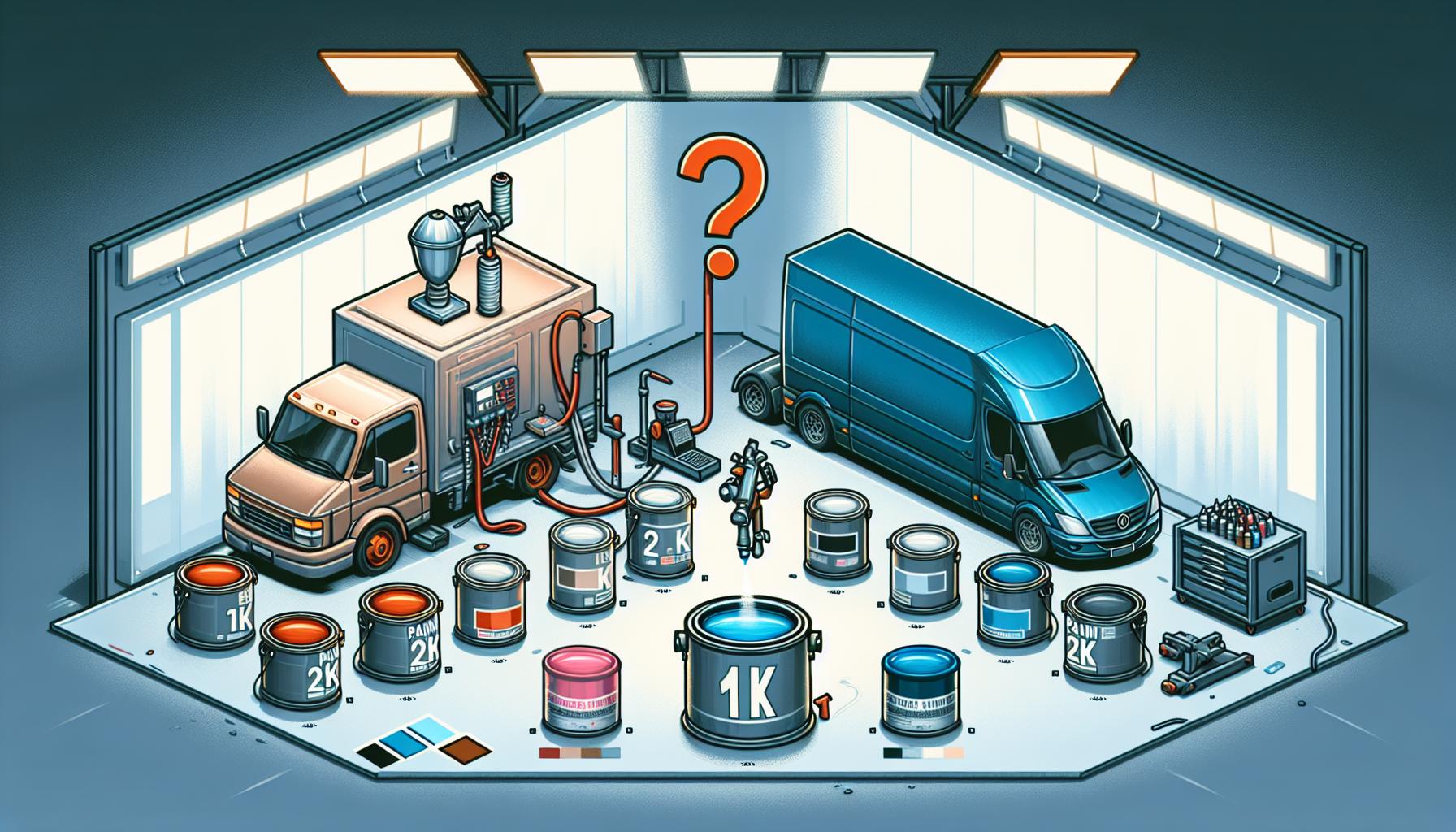
Understanding the Basics: 1K vs 2K Paint Systems
Table of Contents
- Understanding the Basics: 1K vs 2K Paint Systems
- The Science Behind Paint Systems: Why It Matters
- Cost Considerations and ROI: Making Smart Choices
- Avoiding Common Mistakes When Using Paint Systems
- Debunking Myths About 1K and 2K Paint Systems
- Future Trends in Automotive Paint Technology
- Eco-Friendly Initiatives: Choosing Sustainable Paint Options
- Maximising Efficiency: Best Practices for Application
Introduction
Choosing the right paint system for commercial vehicles can be a daunting task. With numerous options available, it’s crucial for repair shops and individual repairers to make informed decisions about 1K and 2K paint systems. This blog post aims to provide a thorough comparison, insights, and guidance to help you decide which paint system is best suited for your needs.
Understanding the Basics: 1K vs 2K Paint Systems
The Science Behind Paint Systems: Why It Matters
In vehicle repair, understanding the distinctions between 1K and 2K paint systems can impact application outcomes and performance. 1K paints, or single-component systems, are ready-to-use formulations that dry through evaporation. They suit quick jobs and minor touch-ups where ease and speed are priorities. In contrast, 2K paints, or two-component systems, involve a hardener that activates the paint, resulting in a durable finish for vehicles exposed to rigorous conditions.
2K paint systems offer enhanced durability due to the cross-linking chemical reaction upon mixing, resulting in tougher coatings that withstand chemicals, abrasion, and environmental stress more effectively than 1K systems. This makes them ideal for commercial vehicles facing challenging conditions.
Application techniques differ significantly between the two. 1K paints air-dry quickly, enabling straightforward application, whereas 2K systems require more careful preparation and precise mixing of components for optimal results. They also necessitate stricter environmental conditions during application; high humidity or low temperatures can adversely affect the curing process, causing potential defects in the finish.
Safety considerations are crucial with 2K paints due to the presence of diisocyanates. Professionals must undergo training to safely handle these materials, ensuring regulatory compliance and worker health protection. Personal protective equipment, like respirators and gloves, is essential with these systems.
The Science Behind Paint Systems: Why It Matters
When evaluating 1K and 2K paint systems, body shops must consider both initial costs and potential long-term savings. Although 1K systems come with lower upfront expenses, 2K systems, despite their higher initial financial outlay, often deliver superior performance and longevity.
Initial Investment: 1K paint systems generally require less upfront investment. They are simple to use and do not necessitate complex mixing equipment, appealing to smaller workshops or operations new to paint applications. However, 1K systems may not offer the same durability and finish quality as 2K systems, potentially leading to more frequent repainting.
Long-Term Benefits: In contrast, 2K systems, despite higher initial costs for added equipment and training, can lead to significant savings through fewer repaints and less maintenance over time. They typically offer better adhesion and resistance to environmental factors, reducing chipping and fading risks. Vehicles painted with 2K finishes tend to retain higher resale value, improving body shops’ return on investment.
Efficiency: Time efficiency is critical. Although 2K systems might demand longer preparation times due to mixing components, they can achieve full coverage with fewer coats than 1K systems. This shortens job time and optimises material use, making 2K more cost-effective in high-volume operations.
Ultimately, choosing between 1K and 2K paint systems should involve assessing immediate financial capacity against long-term operational efficacy and customer satisfaction. Body shops investing in quality finishes may gain heightened client trust, further enhancing their market position.
Cost Considerations and ROI: Making Smart Choices
Common Pitfalls in Using 1K and 2K Paint Systems
Body shops face several challenges when working with 1K and 2K paint systems. Understanding these common pitfalls can significantly enhance repair quality and client satisfaction.
Here is a table you can use to highlight common pitfalls when using 1K and 2K paint systems on commercial vehicles.
Common Pitfalls in Using 1K and 2K Paint Systems for Commercial Vehicles
| Pitfall | What Typically Happens | Better Practice for Commercial Fleets |
|---|---|---|
| Using 1K where 2K durability is needed | 1K is chosen for cost and speed but fails early under chemicals, UV, and heavy wash routines. | Reserve 1K for light‑duty or interior parts; use 2K on cabs, boxes, chassis, and high‑exposure areas. |
| Assuming 2K is always the best choice | 2K is used everywhere, including quick, cosmetic or low‑wear repairs, increasing cost and complexity. | Match system to duty cycle: 1K for fast cosmetic jobs, 2K for long‑life, high‑wear commercial service. |
| Poor mixing ratios on 2K products | Incorrect hardener ratio leads to soft films, gloss loss, or poor chemical resistance. | Use accurate scales or mixing cups, follow specified ratios, and mix thoroughly before application. |
| Ignoring pot life of 2K systems | Mixed material is used after pot life, causing slow cure, poor adhesion, and variable gloss. | Mix only what is needed, track pot‑life times, and discard material that has exceeded its window. |
| Treating 1K as “prep‑tolerant” | 1K is applied over marginally cleaned or glossy substrates, leading to early peeling and flaking. | Clean, degrease, and abrade surfaces properly even for 1K; treat it as a professional system. |
| Over‑thinning 1K or 2K to “improve flow” | Excess thinner reduces film build and protection, causing poor hiding and reduced durability. | Stay within recommended thinning range and aim for specified film thickness per coat. |
| Using the wrong hardener or activator in 2K systems | Incompatible hardeners cause slow cure, brittleness, or adhesion issues. | Use only system‑approved hardeners and activators for each specific 2K product line. |
| Ignoring environmental and safety demands of 2K (isocyanates) | Inadequate PPE and extraction increase health risks and regulatory exposure. | Provide proper booths, respirators, and training; where this is not possible, favour suitable 1K options. |
| Expecting 1K to withstand aggressive chemicals and fuels on fleets | 1K softens or stains around fuel fillers, chemical splash zones, and high‑traffic contact areas. | Specify 2K in areas exposed to fuel, de‑icers, detergents, and road grime. |
| Rushing flash‑off and cure times for both 1K and 2K | Trapped solvent causes solvent pop, die‑back, and premature chalking on large panels. | Respect flash and bake schedules, especially on big truck sides and box bodies |
Mixing and Ratio Errors
A major issue with 2K systems is incorrect mixing of hardeners and activators. It’s essential to strictly follow manufacturer’s specifications regarding mixing ratios. Failure can lead to cracking and poor adhesion, affecting finish longevity and appearance. Graduated cups or digital scales can assist in achieving accuracy during the mixing process.
Environmental Conditions
The application environment greatly affects the paint job outcome. 2K systems are particularly sensitive to temperature and humidity. Excessive heat can cause rapid curing, while high humidity may introduce surface defects. In contrast, 1K systems cure by evaporation and have wider tolerance for variations, whereas 2K systems need optimal conditions for a flawless finish.
Substrate Preparation
Proper substrate preparation is vital. Applying paint on incompatible surfaces without adequate preparation can result in bubbles, peeling, and poor adhesion. Transitioning from 1K to 2K systems requires thorough sanding of the existing surface and possibly an adhesion promoter to ensure a successful bond.
Film Thickness Issues
Maintaining consistent film thickness is crucial; applying too little paint can lead to uneven finishes, while excessive coatings may sag. Particularly, 1K primers may shrink as solvents evaporate, necessitating multiple priming and blocking cycles to achieve the desired thickness and finish.
Health and Safety Considerations
When working with 2K systems, isocyanates make proper respiratory protection and ventilation paramount. Additionally, cleaning equipment immediately after use is crucial to avoid paint curing and hardening within tools.
Strategies for Avoiding Common Mistakes
- Invest in accurate measuring tools: Use digital scales for precise mixing ratios.
- Control the environment: Avoid painting in extreme temperatures or humidity levels.
- Prioritise proper preparation: Ensure surfaces are thoroughly cleaned and sanded before application.
- Monitor paint thickness: Regularly check film thickness during application to avoid imperfections.
- Implement safety protocols: Ensure proper protective equipment is available and used at all times.
Avoiding Common Mistakes When Using Paint Systems
Debunking Myths About 1K and 2K Paint Systems
In the UK vehicle refinishing industry, misconceptions about 1K and 2K paint systems can lead to ill-informed decisions impacting quality and cost-effectiveness. Understanding these myths is crucial for selecting the right paint system for specific applications.
One myth suggests that 1K paint systems are inferior and suitable only for touch-up work. While 1K paints are designed for low-wear applications, they can be effective for quick applications. In environments not exposed to harsh conditions, 1K systems can deliver satisfactory results at a lower cost, suitable for DIY projects or interior refinishes.
Conversely, some believe that 2K systems are for professional use due to complexity. Although 2K paints require mixing with a hardener, advancements make them more accessible. Many manufacturers provide user-friendly mixing kits, and with proper training, even amateurs can apply them effectively. Their durability and finish quality justifies their use, particularly for exterior panels facing harsher environments.
Another misconception is that 1K paints are more environmentally friendly. While 1K systems often have lower VOC levels, this doesn’t make them automatically better. Lower durability can lead to more repainting, negating environmental advantages over a paint’s lifecycle. The longevity of 2K systems maintains vehicle aesthetics longer, reducing additional applications.
Lastly, it’s believed that 2K systems are always more expensive without considering their value. Although the initial cost may be higher, optimal coverage and durability allow body shops to better maintain vehicle value, making 2K paints more economical long-term.
Debunking Myths About 1K and 2K Paint Systems
Future Trends in Automotive Paint Technology
As the automotive industry evolves, paint technology is rapidly advancing, particularly in 1K and 2K systems for commercial vehicles. The UK market is witnessing a transition influenced by environmental regulations, electrification, and advances in coating technology. One trend is the shift towards waterborne and low-VOC coatings, driven by stringent environmental compliance requirements. This transition enhances application safety and paintwork longevity, making it a preferred choice in UK body shops.
Additionally, vehicle electrification necessitates specialised paints that withstand higher temperatures and offer robust protection. Companies are integrating thermal-resistant primers and innovative resins suitable for electric vehicle (EV) production. This trend aligns with the aim to phase out petrol and diesel vehicles by 2030, accelerating investments in EV-friendly materials and coatings.
An exciting development in automotive paints is nanocoatings and graphene-enhanced technologies, providing increased durability and aesthetic appeal through multi-colour pigments and liquid-metal effects. Such innovations not only boost visual sophistication but also offer improved corrosion resistance, crucial for commercial vehicles enduring harsh conditions.
Furthermore, automation in paint application is increasingly sophisticated. Robotic painting systems and AI-driven technologies now improve consistency and reduce waste, essential for body shops seeking efficiency and cost-effectiveness. Machine vision systems allow precise application tailored to various vehicle shapes, enhancing the overall finish quality.
Future Trends in Automotive Paint Technology
Environmental Impact of 1K vs 2K Paint Systems
Understanding the environmental implications of 1K and 2K paint systems is critical for body shops pursuing sustainable practices. A significant difference lies in their volatile organic compound (VOC) emissions. 1K paint systems, especially water-based ones, emit much lower VOC levels compared to traditional solvent-based 2K counterparts. This reduction is essential in helping body shops comply with UK regulations and reduce their carbon footprint.
- VOC Emissions: 1K systems produce minimal VOCs, reducing air pollution and regulatory burdens. In contrast, 2K systems emit high VOCs that contribute to ozone formation, producing approximately 2.4 kg of CO2 per kilogram of paint used.
- Hazardous Materials: 1K paints are typically isocyanate-free, avoiding health risks like respiratory issues. Conversely, 2K systems containing isocyanates need stringent safety measures, including personal protective equipment (PPE) and controlled spray environments.
- Waste Generation: The disposal of mixed paint and disposable pots in 2K systems generates substantial hazardous waste, while 1K systems have reduced waste generation and simpler water-based cleanup.
Body shops seeking sustainable solutions should consider water-based 1K coatings to meet compliance standards and environmental concerns. These coatings are user-friendly, cost-effective, and suitable for many repairs, even if they lack some 2K systems’ durability. For situations where durability is vital, 2K water-based systems offer a viable compromise, providing traditional 2K systems’ strength while adhering to stricter environmental guidelines.
Eco-Friendly Initiatives: Choosing Sustainable Paint Options
Application Techniques for 1K and 2K Paints
When applying 1K (single-component) and 2K (two-component) automotive paints, vehicle repairers must adhere to specific best practices for optimal results. Understanding the systems’ differences is crucial for anyone in body shops servicing commercial or private vehicles.
Surface Preparation
Effective painting starts with meticulous surface preparation. Follow these steps:
- Sand the Surface: Use abrasive paper, ideally 800 grit, to lightly sand the area. If the existing paint is intact, extensive removal may be unnecessary.
- Dust and Degrease: Thoroughly dust and degrease the bodywork to eliminate contaminants like grease marks and fingerprints.
- Masking: Use masking tape and paper to protect areas not intended for painting, such as windows, rubber joints, and wheels.
1K Paint Application
1K paints are user-friendly, applied in thin layers without complex mixing. Follow these guidelines:
- Utilise a spray gun for application, adhering to recommended mixing ratios and drying times.
- Apply several thin coats, allowing adequate drying time between each.
- Be mindful of environmental conditions; experts recommend applying paint in temperatures between 15°C and 25°C.
2K Paint Application
The process for 2K paints is slightly more involved:
- Always mix paint with the appropriate hardener as specified on the product’s technical data sheet.
- Use the mixture within 30 minutes to avoid premature curing.
- Implement the “wet on wet” technique, applying layers while the previous one is tacky to enhance adhesion.
Safety Considerations
Protective measures are essential:
- Wear a respiratory mask equipped with a type A filter to guard against paint vapours.
- Use gloves and protective clothing to prevent skin contact.
- Ensure the workspace is well-ventilated to dissipate fumes.
Final Checks
Before concluding the paint job, check film thickness using gauges to ensure compliance with OEM specifications, especially for vehicles with advanced driver assistance systems (ADAS).
Maintaining Quality Standards
Regular maintenance of application equipment is crucial, as contaminated guns can lead to defects in the finish.
Maximising Efficiency: Best Practices for Application
Understanding 1K and 2K Paint Systems for Body Shops
In the UK, commercial vehicle body shops face a crucial decision when selecting paint systems: whether to adopt 1K (one-component) or 2K (two-component) paints. Each option presents distinct advantages suited to different applications and performance requirements, especially for commercial vehicles like trucks and buses.
1K Paint Systems are designed to air-dry without a hardener, resulting in quick drying times. They appeal for less demanding tasks, such as interior refinishing or touch-ups. Their straightforward process is ideal for those seeking an easy solution, though they remain solvent-reversible and prone to degradation from UV exposure and abrasion. According to industry insights, 1K paints are best suited for low-wear applications rather than heavy-duty use.
Conversely, 2K Paint Systems require a hardener to catalyse a chemical reaction, forming a robust and durable finish. These paints excel at resisting chemicals and harsh elements, preferred for exterior applications. Their gloss retention and wear resistance under high-traffic conditions play a vital role in commercial vehicles’ long-term maintenance. While initial drying time is slower, the cure hardens over time, delivering superior performance and longevity.
When selecting between 1K and 2K systems, body shops should consider:
- Durability Needs: Opt for 2K for external surfaces exposed to harsh conditions.
- Application Expertise: Consider training staff to handle 2K’s higher complexity.
- Cost Implications: While 1K is cheaper, it offers lower durability than 2K systems.
In conclusion, while 1K systems offer quick solutions, the robust performance and long-term benefits of 2K systems make them indispensable for body shops focused on durability and quality finishes for commercial vehicles.
Sources
- Hiwe – Understanding 1K vs 2K Paint Systems
- Online Paint Shop – Difference Between 1K and 2K Paints
- TA Industrial Paints – What is the Difference Between 1K and 2K Paint?
- IPS Paint – 2K vs 1K Paint Systems: What Commercial Body Shops Need to Know
- Airtasker – Interior Painting Cost
- London Sprayers – How Much Does Spray Painting Cost
- Everest Automotive Market – Understanding 1K and Two Stage Paint Systems in Automotive Refinishing
- The Auto Paint Depot – 1K Base Coat vs 2K Single Stage