
Post-Valet Handover Checks: Paint, Trim & Finish Before Release
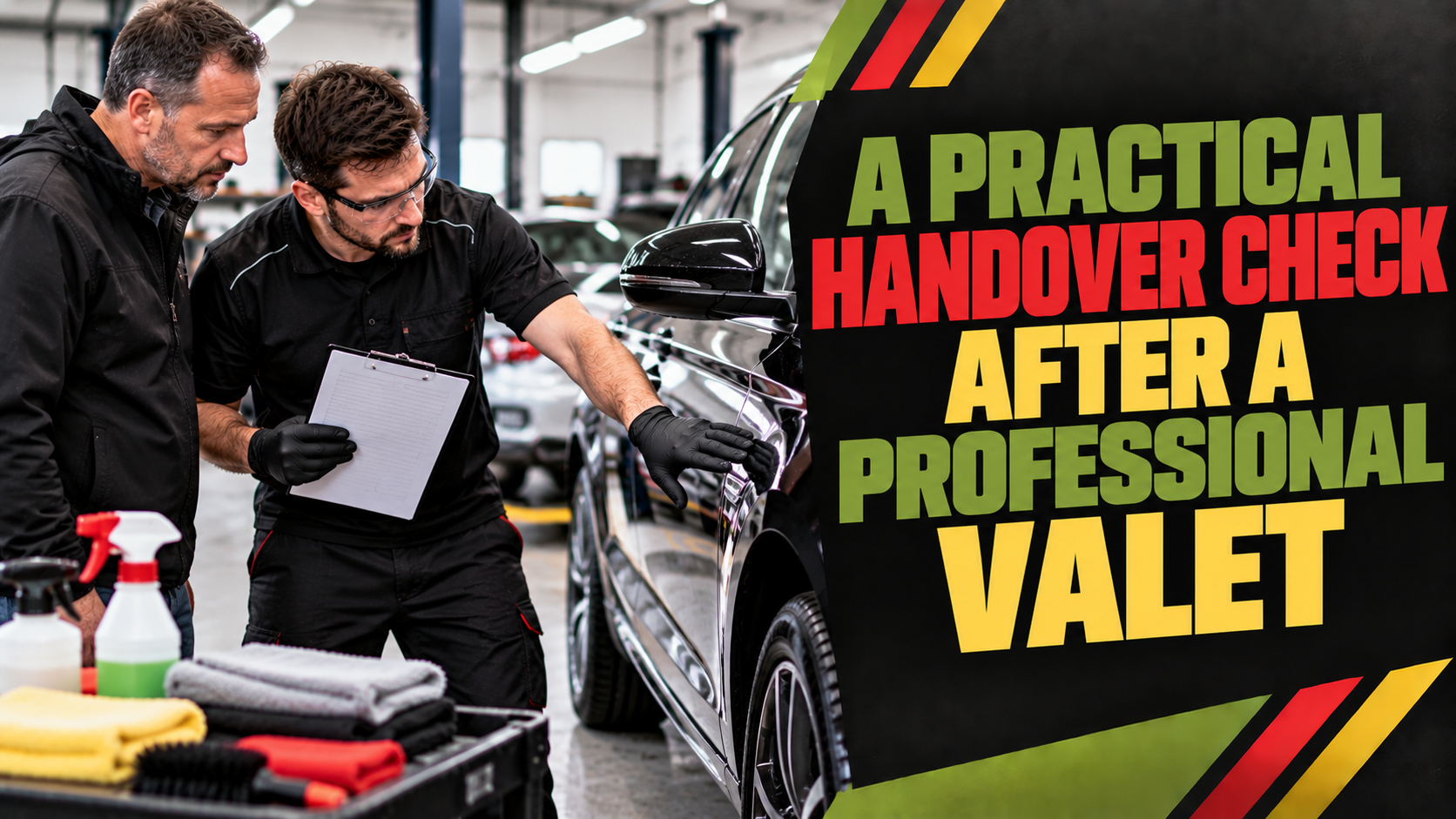
A perfect polish means nothing if a swirl mark catches the afternoon sun at handover. Learn the exact lighting trick, trim checks, and documentation habit professional detailers use to catch defects before customers do.
Key Takeaways
- Agree the scope of the valet before carrying out the final inspection.
- Check paint, wheels, lower panels, glass and mirrors in suitable lighting for residue, water marks and missed areas.
- Inside, inspect visible trim, seats, mats, footwells, touch surfaces and internal glass.
- Make sure fabrics are adequately dry and that controls or grip surfaces have not been left greasy or slippery.
- Record anything outside the agreed service scope and note any product, surface or issue that needs follow-up.The final moments before a car leaves the bay matter more than almost any other part of the job.
A customer rarely remembers how long a polish took or which compound was used, but they will remember a swirl mark caught in the afternoon sun or a smear left across the rear windscreen. Getting the handover right protects the hours of work that came before it.
Why The Final Check Decides Satisfaction
A detail can be technically excellent and still leave a customer unhappy if the final inspection is rushed or skipped altogether. Professional detailers know the handover moment is where quality is actually judged, not during the wash, the correction stage, or the application of protection. Dealerships and bodyshops use dedicated quality inspection checklists for exactly this reason, verifying that every element of the work meets customer standards before a vehicle is returned or displayed.
Skipping a proper final check creates two separate risks. First, defects that were always there, or new damage picked up during handling, go unnoticed until the customer spots them, at which point trust is harder to rebuild. Second, genuine detailing faults such as missed panels, residue, or product haze get discovered by the client rather than the business, turning a routine collection into an awkward conversation. IPS Paint supplies bodyshops and valeters across South Wales with the products and technical knowledge that support a reliable finish.
Check the Exterior in Good Light
Walk around the vehicle in good light and inspect the paint from more than one angle. Look for remaining product residue, water marks and obvious areas that have been missed.
Check the wheels, wheel arches and lower panels against the service that was agreed with the customer. A maintenance valet and a more extensive detailing job should not be judged against the same checklist, so the final inspection should always reflect the work that was actually booked.
For bodyshop work, inspect the repaired area under suitable lighting and follow the paint system’s own handover procedure.
Record Exceptions and Follow-Up
If a stain, coating defect, paint mark or other issue falls outside the agreed service, record it clearly rather than attempting to conceal it with a dressing or promising that it can be removed.
For each job, note what was completed, any exceptions identified during the final inspection and any product, surface or issue that needs follow-up. This creates a consistent record that another team member can understand and helps make the handover process repeatable.
Building A Consistent Handover Checklist
Consistency turns a good final check into a reliable business process rather than something left to memory or mood. A written or digital checklist, used on every vehicle regardless of job size, ensures nothing gets skipped when the workshop is busy or a collection time is looming.
A practical handover checklist can include:
- Paint checked from more than one angle for residue, water marks and obvious missed areas
- Wheels, wheel arches and lower panels checked against the agreed service
- External glass and mirrors checked from inside and outside
- Touch surfaces and visible interior trim checked for residue
- Seats, mats, footwells and internal glass checked against the agreed service
- Fabrics checked to ensure they are adequately dry for handover
- Controls and grip surfaces checked for greasy or slippery residue
- Bottles, cloths and tools removed from the vehicle
- Exceptions and anything requiring follow-up recorded clearly
Treating this list as a standard part of the workflow, rather than a box-ticking exercise reserved for complaints, builds the kind of reputation that keeps customers returning and referring others.
Make the Final Check Repeatable
A short final inspection can catch residue, smears, missed areas and other issues while the correct tools are still close at hand. The check should reflect the service that was agreed rather than applying the same standard to every type of valet.
Using a consistent checklist and recording exceptions or follow-up points turns a subjective “looks good” into a handover process that another member of the team can repeat.
For a checklist that holds up job after job, start with a reliable range of detailing and finishing products built for the final stages of the process, where the small details end up deciding the whole result.