
Roar 1030 vs Crystal Serum Ultra: Polish Role vs Ceramic Protection
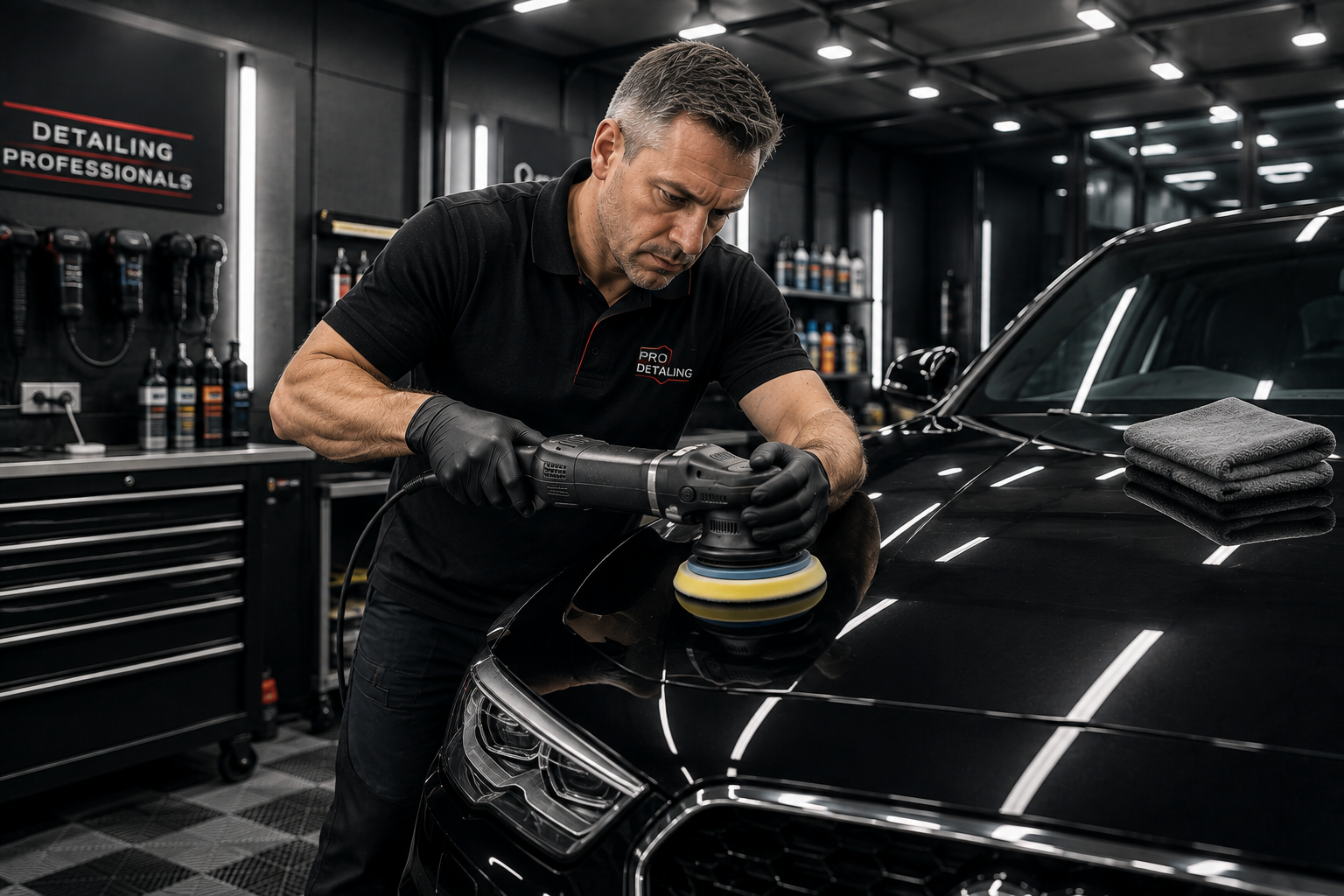
Ever wondered why a ceramic coating can lock in flaws instead of hiding them? One professional-only formula carries a nine-year guarantee, but its success hinges entirely on a finishing step most people overlook completely.
Key Takeaways
- Roar 1030 Ceramic Ultra Finish Polish and Gtechniq Crystal Serum Ultra serve different stages of the detailing process rather than competing for the same job
- Roar 1030 uses sub-micron ceramic abrasives to remove fine haze and micro-marring, giving dark colours in particular a deep, optically clear gloss before protection is added
- Crystal Serum Ultra pairs a hard 10H upper layer with a softer 7H base layer and carries a nine-year guarantee, but only when applied by a Gtechniq Accredited Detailer
- A reliable workflow runs decontaminate, correct, refine, prepare, coat, then maintain – skipping the refinement stage means locking existing defects under the coating permanently
- IPS Paint supplies professional finishing products suited to each stage of that workflow, from correction through to coating
A premium ceramic finish rarely comes from the coating alone. What happens to the paint before that coating goes on often decides whether a car looks simply clean, or genuinely exceptional under inspection lighting.
Two Products, Two Very Different Jobs
Roar 1030 Ceramic Ultra Finish Polish and Gtechniq Crystal Serum Ultra get mentioned in the same breath fairly often, and it’s easy to see why. Both sit somewhere near the end of a professional detailing job, and both play a part in that glassy, deep-gloss look customers expect from top-tier work. Look closer, though, and the two products handle separate tasks entirely.
Roar 1030 is a finishing polish. Its job is to refine the paint surface itself, smoothing away the last traces of imperfection until the reflection is crisp and clean. Crystal Serum Ultra is a ceramic coating, and its job starts once that refinement work is finished: locking in the result and shielding it from everything the road, weather and careless car washes can throw at it. IPS Paint supplies professional finishing products built for exactly this kind of staged approach, where refinement and protection each get the attention they deserve.
Understanding that split matters for anyone building a repeatable correction-to-protection process, particularly on dark colours, prestige vehicles or any paintwork where flaws are impossible to hide.
Not a Straight Product Comparison
Treating Roar 1030 and Crystal Serum Ultra as rival options overlooks what each one actually does. Roar 1030 Ceramic Ultra Finish Polish is an ultra-fine finishing product designed to produce a high-gloss final finish across automotive, commercial, industrial and marine painted surfaces. Crystal Serum Ultra, meanwhile, is a professional ceramic coating designed to be applied only after the paint has already been properly prepared and refined.
So the useful question for a professional detailer isn’t which product wins. It’s which stage of the job each one belongs to. Roar 1030 sits at the finishing end of correction work; Crystal Serum Ultra sits at the start of long-term protection. Asked separately, both questions have clear, practical answers, which is exactly what makes a structured workflow so valuable.
Refining the Paint Before Protection
Once heavier defects such as scratches and oxidation have been corrected, attention shifts to refinement. This stage is about chasing the last, faintest imperfections rather than the obvious ones.
Removing Haze and Micro-Marring
Compounding does a good job of removing heavier damage, but depending on the paint system, pad and compound combination used, it can leave behind light haze or micro-marring of its own. These marks are often invisible in normal light and only show up under strong inspection lamps, which is precisely where a finished car gets judged most harshly. Roar 1030 is built for this exact moment: it uses sub-micron ceramic abrasives to eliminate ultra-fine scratches, swirl marks and holograms, leaving a mirror-like, high-gloss finish behind. It’s also formulated to minimise dusting during application and contains no fillers, silicones or waxes, keeping it body shop safe and avoiding masking problems that later show up under a coating.
Why Dark Colours Demand Extra Care
Dark paintwork magnifies every flaw. A silver or white panel can hide light swirling reasonably well, but black, navy or deep red paint reflects light in a way that puts every imperfection on display. Roar 1030 is particularly suited to these colours and to final-stage professional paint refinement, where the goal is an optically perfect, deep gloss rather than just a shiny surface. For a professional detailer working on a dark prestige vehicle, this refinement stage often makes the difference between a finish that looks good and one that looks flawless.
Locking in Long-Term Protection
Once the paint has reached the required standard, the emphasis shifts from correction to protection. This is where Crystal Serum Ultra comes in, and its specification reflects just how serious that protective role is.
10H Layer, 7H Base, Nine-Year Guarantee
Gtechniq specifies Crystal Serum Ultra with a hard 10H upper layer combined with a softer 7H base layer, a structure designed to deliver high levels of swirl and chemical resistance. The coating resists chemicals across a wide pH range, guarding against acidic threats like bird droppings and alkaline exposure from harsh soaps, and it’s built to withstand extreme temperature swings without cracking. Backed by all this, Crystal Serum Ultra carries a nine-year guarantee, subject to Gtechniq’s application, maintenance and guarantee conditions. That kind of longevity only holds meaning, though, if the surface underneath it was properly prepared beforehand.
Why Only Accredited Detailers Apply It
Crystal Serum Ultra is Gtechniq’s professional-only ceramic coating, restricted to trained, accredited detailers rather than being available for general sale. That restriction isn’t red tape for its own sake. Application demands careful preparation, precise technique and controlled curing conditions, and getting it wrong can be genuinely difficult to put right. This coating rewards careful, experienced hands, which is exactly why Gtechniq keeps it within an accredited network.
Why Correction Must Come First
Skipping straight to a ceramic coating without proper correction is one of the more common mistakes seen in the industry, and it’s an expensive one to make.
Coatings Preserve, They Don’t Fix
Ceramic coatings are transparent and effectively permanent once cured. They preserve whatever is underneath them without correcting it. If swirls, holograms or compounding haze remain in the clear coat when the coating goes on, that coating simply seals those flaws in place, sometimes making them look more obvious than before. A premium ceramic coating cannot compensate for poor paint preparation, no matter how advanced its chemistry.
Mistakes That Are Hard to Undo
Correcting a mistake after a ceramic coating has cured is far harder than correcting the paint beforehand. Gtechniq notes that incorrectly applied Crystal Serum Ultra may need wet sanding with 1200-grit abrasive to remove, turning what should have been a straightforward refinement job into a much bigger correction task. That’s a strong argument for inspecting the finish thoroughly under proper lighting before any coating is applied, rather than finding a problem once it’s already locked underneath a nine-year guarantee.
Building a Reliable Workflow
Rather than treating polish and coating as competing choices, a structured workflow puts each product exactly where it belongs.
Decontaminate, Correct, Refine, Prepare, Coat, Maintain
A dependable process for professional detailers generally follows six stages:
- Decontaminate – clear the surface of embedded contaminants before any abrasive work begins.
- Correct – remove heavier defects such as scratches, oxidation and deeper swirling.
- Refine – use a fine finishing polish such as Roar 1030 to eliminate any remaining haze or micro-marring left behind by correction.
- Prepare – carry out a panel wipe, typically with isopropyl alcohol, to remove oils and residues before coating.
- Coat – apply the ceramic coating, such as Crystal Serum Ultra, according to the manufacturer’s application and curing requirements.
- Maintain – follow the recommended aftercare routine to protect the coating and preserve its guarantee terms.
Following this sequence gives each product room to do its job properly, and it gives customers a clear explanation for why paint correction is never an unnecessary extra tacked onto a ceramic coating booking. It’s the stage that determines what the coating will actually be protecting.
Refinement and Protection Are Partners, Not Rivals
Comparing Roar 1030 against Crystal Serum Ultra head-to-head was never really the right framing. One refines; the other protects. Both are essential to a finish that holds up to close inspection and lasts for years, and neither can substitute for the other’s role in that process.
For professional detailers building out a consistent, premium service, treating refinement and protection as two connected stages of one job, rather than as alternative products, is what separates an average result from a genuinely outstanding one. A logical starting point is stocking the right professional finishing and coating supplies for each stage of that workflow, so the correction work and the protection that follows it are both given the tools they need to perform.