
Roar 1020 vs Turtle Wax Hybrid Ceramic: Correction vs Protection
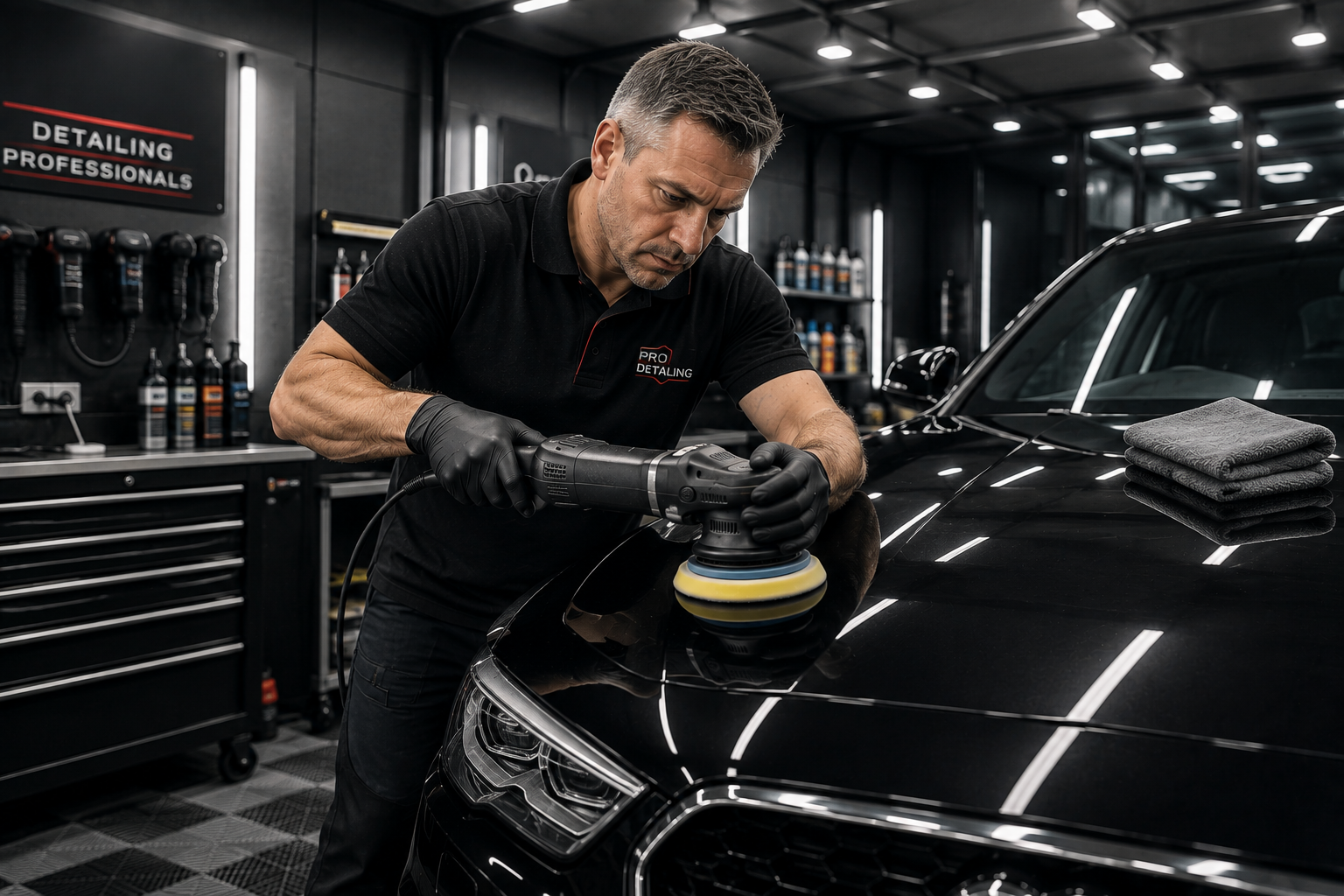
Applying ceramic coating over swirl marks doesn’t hide them; it permanently seals them in, making correction harder later. But most detailers don’t realize they’re using correction compounds and protection products interchangeably. Here’s why sequence matters more than product choice.
Key Takeaways
- ROAR 1020 Ceramic Finish is a paint correction compound – it physically removes swirl marks and defects from the clear coat. Turtle Wax Hybrid Ceramic is a paint protection product – it seals and shields the surface above it.
- These two products are not interchangeable. Using the wrong one at the wrong stage produces a worse result than using either correctly.
- Applying a ceramic coating over uncorrected paint permanently locks defects in – making them harder to address later and potentially more visible under certain lighting.
- The right sequence matters more than the right product. Correction first, then protection – that’s the workflow that produces a finish worth keeping.
- IPS Paint’s detailing catalogue covers both correction compounds and protective coatings, making it a practical reference point when selecting the right product for each stage.
The words “ceramic” and “correction” both appear in premium detailing product names, which can blur the line between them. That confusion has a real cost – not just in wasted product, but in results that won’t hold up once the vehicle leaves the bay.
Two Products, Two Completely Different Jobs
ROAR 1020 Ceramic Finish and Turtle Wax Hybrid Solutions Ceramic Spray Coating share some surface-level language. Both sit in the premium detailing space. Both get marketed alongside words like gloss, ceramic, and protection. They operate at completely different stages of the detailing process, however, and solve completely different problems.
ROAR 1020 is a finishing compound. It works on the paint itself – mechanically refining the clear coat to remove defects. Turtle Wax Hybrid Ceramic is a spray coating. It sits on top of the paint, forming a protective barrier above the clear coat. One fixes what’s wrong. The other preserves what’s right. For professional detailers and body shop technicians, that distinction is the difference between a job done properly and one that will need redoing. IPS Paint’s detailing product range covers both correction and protection, which makes navigating that distinction more straightforward.
What ROAR 1020 Actually Does
ROAR 1020 is a professional finishing compound designed to permanently remove swirl marks, fine scratches, holograms, and polishing haze – refining the paint surface rather than adding anything on top of it.
Consider a dark vehicle that has come through a correction stage. The heavy defects are gone, but under workshop LEDs you can still see micro-marring, reduced clarity, and marks from the previous polishing step. That’s the exact scenario ROAR 1020 is built for. Its ultra-fine abrasives work through those remaining imperfections, increasing gloss by improving the physical condition of the paint – not by masking it.
Permanent Defect Removal, Not a Coating
The gloss ROAR 1020 produces isn’t a product sitting on the paint – it’s the paint itself, refined. When a swirl mark scatters light, it reduces clarity and reflective depth. Remove that defect mechanically, and reflections sharpen. That improvement doesn’t wear off the way a coating does. New swirls can be introduced over time through poor washing or drying, but the corrections made with ROAR 1020 are permanent unless new damage is caused.
Silicone-Free and Body-Shop Safe
ROAR 1020 is formulated to be silicone-free and body-shop safe – a specification that matters significantly in professional refinishing environments. Silicone contamination causes adhesion failures in subsequent paint and coating applications, which is why body shops need to be selective about what they introduce into the workflow. ROAR 1020 was designed with that environment in mind. Application requires machine polishing, and ROAR recommends pairing it with their 6-inch Waffle Black Foam Pad (620PF) for best results.
What Turtle Wax Hybrid Ceramic Does
Turtle Wax Hybrid Solutions Ceramic Spray Coating does something entirely different. Rather than altering the paint, it forms a protective layer above it. Its purpose is to shield the clear coat from UV exposure, environmental contaminants, and everyday wear – while adding hydrophobic water behaviour and ceramic-level gloss enhancement in the process.
SiO2-Based Ceramic Protection
Ceramic coatings – including the Turtle Wax Hybrid Solutions product – typically rely on silicon dioxide (SiO₂) and titanium dioxide (TiO₂) nanoparticles to build a durable, bonded barrier on the paint surface. These particles form a hardened layer that resists contamination and protects against environmental degradation more effectively than traditional wax or sealant products. The result is a surface that stays cleaner for longer and requires less effort to maintain.
Spray-On Simplicity
Turtle Wax Hybrid Ceramic applies via a spray-on, wipe-off method – straightforward enough that it doesn’t require machine polishing or specialist equipment. That simplicity is one of its genuine strengths as a protection product. The technical barrier to ceramic protection is removed, though the product has no corrective capability whatsoever. The paint needs to be clean and defect-free before application – not because the product is demanding, but because it will seal whatever is underneath it.
Why Swirl Marks Change Everything
Swirl marks are one of the most common complaints in professional detailing, and they’re also the issue that most clearly separates these two products.
Swirl marks are fine circular scratches in the clear coat, usually introduced through poor washing technique, automatic car washes, or dry wiping. Under direct light – especially the kind of LED workshop lighting a professional works under – they scatter reflections and cloud the finish. On dark paint, they’re immediately obvious.
Coating Over Defects Locks Them In
Applying a ceramic coating over swirled or scratched paint doesn’t hide those defects – it seals them in. In some conditions, the added gloss and depth of a ceramic coating can actually make existing swirls more prominent, because the surrounding paint appears sharper and the defects contrast more strongly against it.
Once a coating bonds to the clear coat over a defect, correction becomes significantly more complicated. The coating itself needs to be addressed before the defect beneath it can be reached. That’s a compounding problem that starts with one avoidable mistake: skipping the correction stage.
Correction First, Then Protection
The professional workflow isn’t a choice between ROAR 1020 and Turtle Wax Hybrid Ceramic – it’s a sequence. Correction comes first. Protection follows.
A properly structured approach looks something like this:
- Wash and decontaminate – remove bonded contamination and surface debris.
- Inspect under proper lighting – identify swirls, scratches, holograms, and oxidation.
- Carry out heavier correction if needed – ROAR 1020 is a finishing compound, so deeper defects may require a more aggressive stage first.
- Refine with ROAR 1020 – remove remaining swirl marks, eliminate polishing haze, and maximise gloss.
- Prepare the surface – remove polishing oils and residue so the paint is ready to accept a coating.
- Apply Turtle Wax Hybrid Ceramic – protect the corrected, clean surface.
That sequence produces a meaningfully better outcome than either product applied in isolation. The coating protects a genuinely refined surface, and that refined surface makes the ceramic protection look its best.
ROAR 1020 Belongs in the Body Shop
For body shop technicians specifically, ROAR 1020 is the more directly relevant product of the two. Its silicone-free, body-shop-safe formulation means it can be used in refinishing environments without the contamination risk that disqualifies many consumer polishes. Compatible with modern paint systems, including scratch-resistant finishes, it produces the showroom-level gloss expected at the end of a professional repair.
Turtle Wax Hybrid Ceramic, as a spray coating, doesn’t replace any stage of the refinishing workflow – it belongs after it. A body shop applying ceramic protection after a repair still needs to complete the correction and refinement stage first. ROAR 1020 is built for exactly that.
Use ROAR 1020 to Create a Finish Worth Protecting
The most useful way to frame these products is as partners at different points in the process. ROAR 1020 creates the finish. Turtle Wax Hybrid Ceramic preserves it.
A vehicle with swirled, hazy paint and a ceramic coating on top of it hasn’t received a premium result – it’s received a premium price for a mediocre outcome. A vehicle that’s been properly corrected with ROAR 1020, then sealed with a quality ceramic spray, looks genuinely different. The depth, clarity, and reflective quality of the paint come through underneath the ceramic layer rather than being obscured by defects beneath it.
For professional detailers offering tiered packages, that distinction also has commercial value. Paint correction is a separate, chargeable stage. Ceramic protection is another. Clients who understand why both stages exist – and why order matters – are far more likely to invest in the full service. Knowing your products well enough to explain the difference is part of what separates a professional detailer from someone who just polishes cars.
For professional-grade finishing compounds, ceramic coatings, and the full range of detailing essentials, IPS Paint supplies the products and expertise that body shops and detailers rely on.