
3M Perfect-It vs. CarPro Reflect: Balancing Cutting Power & Finishing
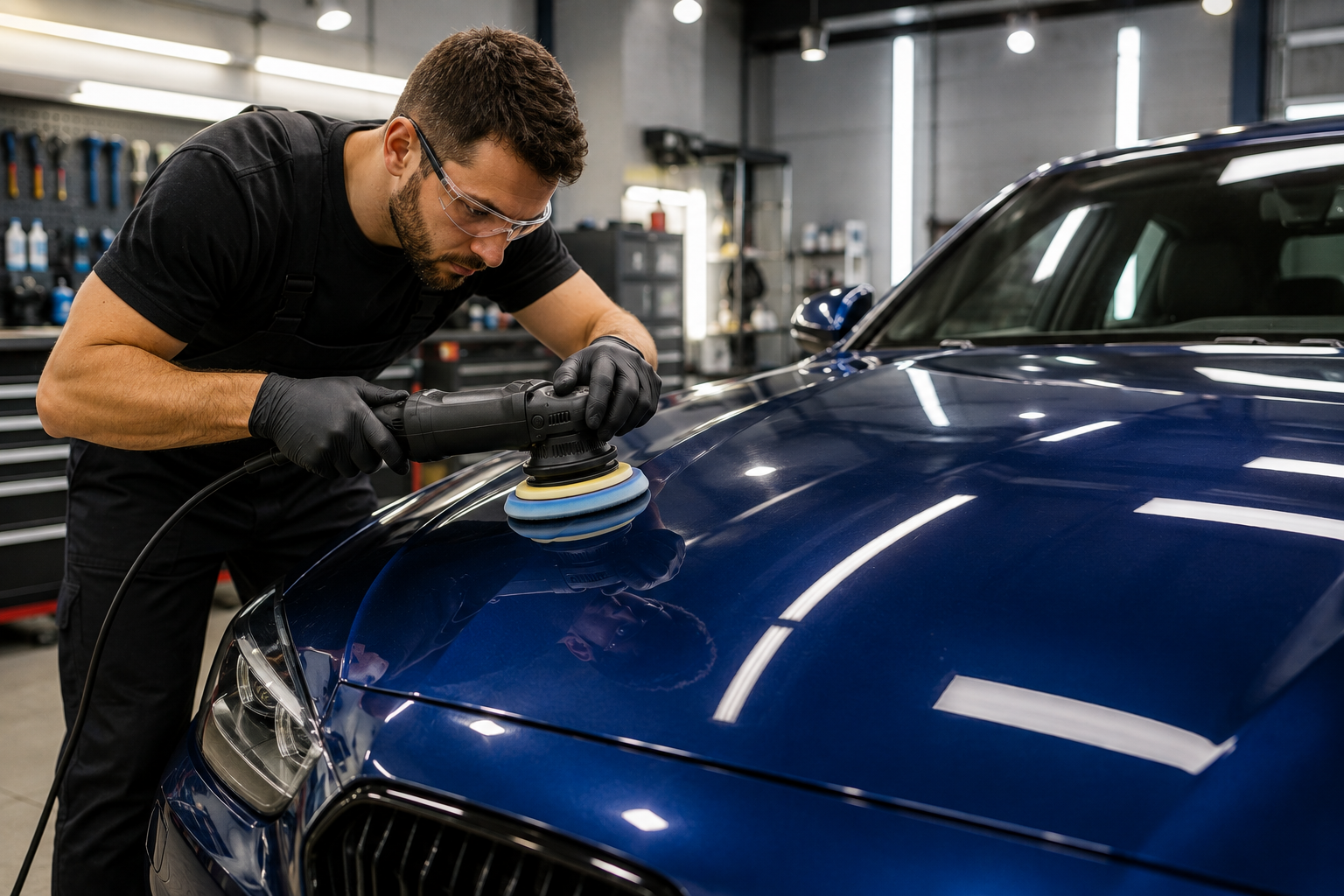
One poor compound choice during paint correction can mean expensive rework and hologram nightmares under inspection lights. Here’s how to decode whether you need a multi-stage system or a one-step solution before you pick up the machine polisher.
Key Takeaways
- 3M Perfect-It is a structured, multi-stage system best suited to collision repair, heavy defect removal, and situations where consistent, repeatable results are non-negotiable.
- Sonax PROFILINE Cut+Finish combines moderate cutting power with high-gloss finishing in a single polishing stage – making it highly efficient for dealership prep, enhancement details, and SMART repairs.
- Pad selection shifts the performance of either system significantly; knowing which pad to pair with which product is as important as the compound itself.
- Neither product is universally superior – the right choice depends on defect severity, paint type, and workshop throughput requirements.
- Read on to understand how pad combinations, paint hardness, and defect depth should guide every correction decision.
Paint correction is one of those disciplines where the wrong product choice doesn’t just cost time – it costs money, reputation, and sometimes the panel itself. Whether a technician is refinishing a freshly sprayed bumper or preparing a used vehicle for forecourt display, selecting the right polishing system from the outset determines the quality of the result. IPS Paint supplies professional correction systems to body shops and detailers across the UK, and this comparison is designed to help those professionals make a faster, more confident decision.
One Product or Three? The Real Cost of Getting Paint Correction Wrong
A single poor product choice during paint correction can cascade quickly. Use too aggressive a compound without the right finishing step, and holograms appear under the inspection light. Rely on a one-step polish for a job that needed a dedicated cutter, and defects remain visible at certain angles. Both outcomes mean rework – and rework is expensive.
The core tension in professional paint correction sits between correction power and finishing quality. Push too hard towards cutting performance and the finish suffers. Prioritise gloss from the outset and deeper defects remain. Understanding where 3M Perfect-It and Sonax PROFILINE Cut+Finish each sit on that spectrum is the starting point for getting it right first time.
Two Different Polishing Philosophies
3M Perfect-It: Staged, Multi-Step Control
The 3M Perfect-It range is built around the principle that different stages of correction require different abrasive technologies. Rather than expecting one compound to do everything, it assigns a specific role to each product in the system:
- 3M Perfect-It Fast Cut Plus Extreme (Green Cap) – removes heavy scratches, deep oxidation, and coarse sanding marks typically from P1500-P2000 grit.
- 3M Perfect-It Extra Fine Plus Compound (Yellow Cap) – refines moderate defects and swirl marks, bridging the gap between heavy cutting and final finishing.
- 3M Perfect-It Ultrafine Machine Polish (Blue Cap) – eliminates residual holograms and maximises optical clarity as the final polishing step.
This structured approach gives technicians precise control at every stage and allows each step to be optimised independently – a key advantage in collision repair environments where consistency across multiple technicians is essential.
Sonax PROFILINE Cut+Finish: Finishing-Focused Refinement
Sonax PROFILINE Cut+Finish is engineered to combine moderate cutting ability with gloss-producing finishing performance in a single polishing stage. It removes moderate scratches, swirl marks, light oxidation, paint overspray, dust nibs, and sanding marks up to approximately P1500 grit. The formula is silicone-free and low-dusting, which keeps the working environment cleaner and reduces inspection time between stages.
Where the 3M system asks technicians to progress through dedicated stages, Sonax PROFILINE Cut+Finish is designed to complete both correction and refinement simultaneously – significantly reducing the number of steps, pad changes, and products required on suitable vehicles.
Cutting Power: Where 3M Perfect-It and Sonax PROFILINE Cut+Finish Differ
Heavy Defects and Deep Scratches
For heavily oxidised panels, deep scratches, or sanding marks from coarser grits (P1200 and below), the 3M Perfect-It Fast Cut Plus Extreme is the clear choice. No one-step compound is designed to handle that level of correction without sacrificing finish quality. Sonax PROFILINE Cut+Finish is not intended as a replacement for a dedicated heavy-cutting compound in these scenarios – attempting to use it on severe defects will result in extended polishing time, increased paint removal risk, and an inconsistent result.
Moderate Defects and Sanding Marks
This is where the comparison becomes genuinely competitive. Sonax PROFILINE Cut+Finish handles sanding marks up to P1500 and moderate swirl marks effectively in one pass. The 3M Perfect-It Extra Fine Plus Compound covers similar territory, though it forms part of a wider staged system rather than operating as a standalone one-step solution. For a vehicle with moderate defects and no heavy correction required, the Sonax product reaches a presentable finish faster.
Finishing Quality on Dark and Soft Paints
3M Ultrafine Polish vs. Sonax PROFILINE Cut+Finish Gloss Results
Finishing quality is where the difference between a multi-stage and a one-step approach becomes most visible – literally. The 3M Perfect-It Ultrafine Machine Polish (Blue Cap) is specifically engineered to eliminate holograms that can remain after earlier compounding stages, producing deep optical clarity and a rich gloss. It is a dedicated finishing step with nothing asked of it except perfection.
Sonax PROFILINE Cut+Finish delivers impressive gloss for a one-step product, and on lighter colours or moderately hard clear coats, many professionals consider the result sufficient without any additional refinement. On darker colours – particularly blacks, dark blues, and deep reds – or on softer European clear coats, some detailers choose to follow with Sonax PROFILINE Perfect Finish to achieve the highest level of clarity. Sonax themselves recommend this approach when paint colour or softness demands it.
For the highest possible gloss on dark or sensitive paint, the staged 3M approach holds a measurable advantage. For most daily correction work, Sonax PROFILINE Cut+Finish reaches an excellent standard without the additional step.
Workshop Efficiency: Steps, Pads, and Throughput
High-Volume Body Shops
In a collision repair centre processing multiple vehicles per day, consistency and repeatability matter more than speed on any individual car. The structured 3M Perfect-It workflow provides exactly that – each technician follows the same stages, uses the same products, and produces results that can be quality-checked against the same standard. This is particularly valuable for manufacturer-approved repair programmes and insurance work where documented processes carry real weight.
Detailing Studios and Dealership Prep
For detailing studios carrying out enhancement details and dealerships preparing used vehicles for sale, the calculus shifts. Fewer steps, fewer pad changes, and less product switching directly translates to more vehicles corrected per day. Sonax PROFILINE Cut+Finish earns its place in these environments precisely because it combines two polishing stages into one without meaningfully compromising the cosmetic outcome on vehicles with moderate defects.
Pad Selection: How It Shifts Each System’s Performance
Neither compound performs identically across every pad combination – and this point is frequently underestimated, even by experienced technicians. A cutting foam pad amplifies correction power; a finishing or polishing pad softens abrasive behaviour and improves gloss. The same product can produce notably different results depending on which pad is mounted on the machine.
Sonax recommends a medium-hard polishing pad as the starting point for PROFILINE Cut+Finish, which balances defect removal against gloss output. Moving to a softer pad reduces cut but refines the finish further on sensitive paints. With the 3M system, pad hardness is typically adjusted to match the specific stage – firmer pads for the Fast Cut Extreme, progressively softer pads through the Extra Fine and Ultrafine stages.
Key variables that should inform pad selection for either system:
- Paint hardness – softer clear coats cut more readily; harder paints require more aggressive pad and compound combinations.
- Vehicle age – older paint with existing UV degradation may respond differently to abrasive pressure.
- Scratch depth – deeper defects require more cut; shallower defects allow a milder approach.
- Clear coat thickness – thinner clear requires more conservative cutting to avoid burning through.
- Target finish level – show-car clarity demands different decisions than forecourt-ready presentation.
Match the Correction Approach to the Repair Scenario
The right system is always the one matched to the job, not the one sitting nearest on the shelf. A quick reference:
- Choose 3M Perfect-It when heavy defects, coarse sanding marks, freshly sprayed panels, or collision repair consistency are involved. The staged system provides the control and repeatability that demanding refinishing environments require.
- Choose Sonax PROFILINE Cut+Finish when moderate defects are present, throughput matters, and the goal is a high-gloss result with minimal steps. Ideal for enhancement details, SMART repairs, used vehicle preparation, and dealership work.
- Consider a two-step Sonax approach – Cut+Finish followed by PROFILINE Perfect Finish – when working on very dark or soft paint where one-step gloss falls slightly short of what the job demands.
Choose the Right System First – Your Finish Depends on It
The 3M Perfect-It system and Sonax PROFILINE Cut+Finish solve different problems. 3M’s multi-stage approach delivers unmatched control for heavy correction and high-stakes refinishing. Sonax PROFILINE Cut+Finish offers a genuinely capable one-step solution for moderate correction with excellent efficiency. Selecting the wrong tool for the situation adds time, increases defect risk, and can compromise the very finish the correction process is designed to restore.
The most reliable habit any technician can develop is assessing defect severity, paint type, and the finish standard required before reaching for a compound – and choosing accordingly every time.
For professional-grade paint correction products, polishing compounds, and refinishing supplies, visit IPS Paint – specialists in automotive refinishing for body shops and detailers across the UK.