
3M Perfect-It vs. Shine Supply: Filler-Free Formulation Differences
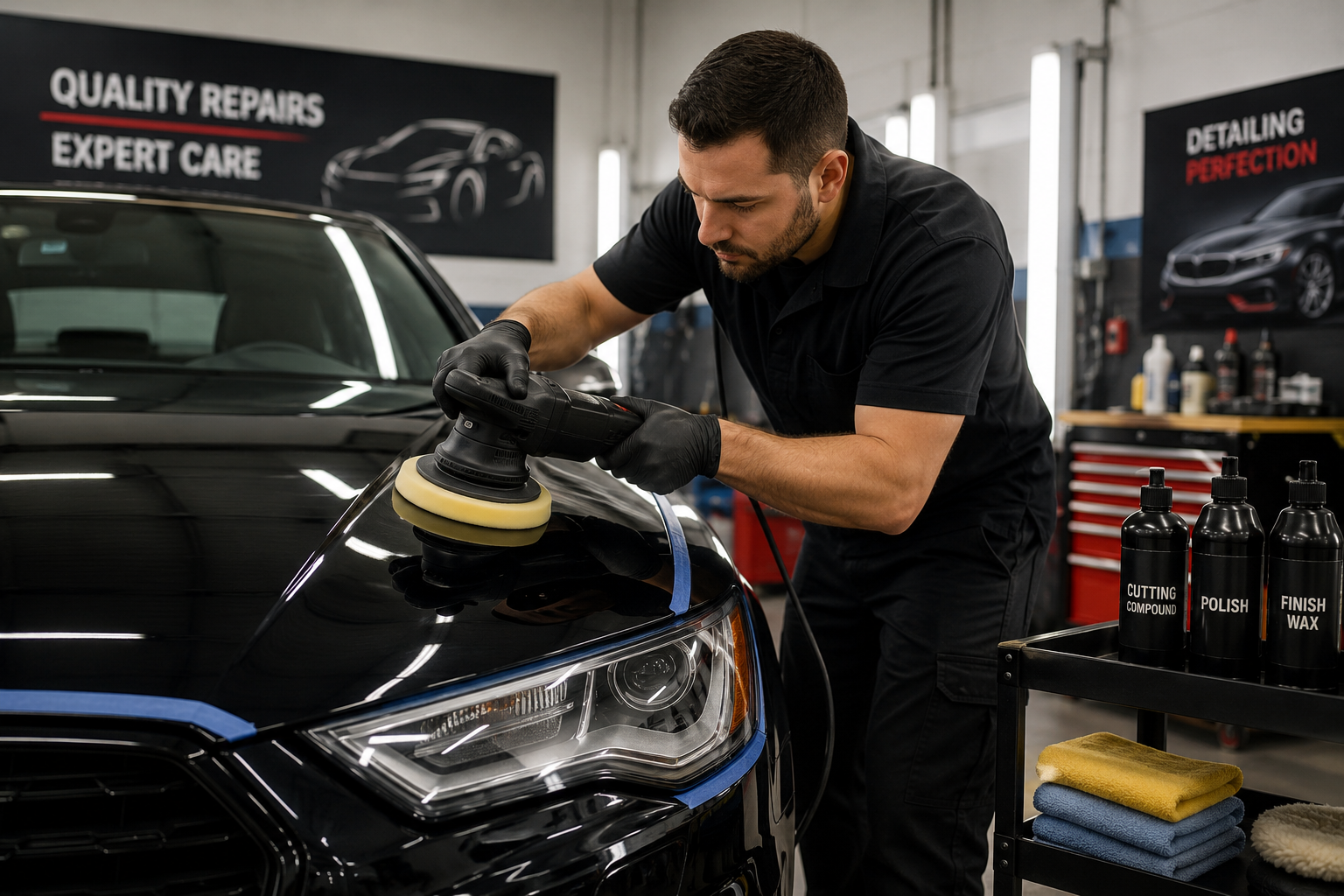
Ever wonder why your paint correction looks flawless after polishing but swirl marks mysteriously reappear a few washes later? The difference between fillers and genuine defect removal could be costing you repeat business, especially if ceramic coatings are part of your workflow.
Key Takeaways
- Fillers in polish temporarily mask paint defects – they don’t remove them, meaning swirls and scratches can reappear after washing.
- Shine Supply Classic Polish is formulated without fillers, waxes, or silicones, delivering genuine defect removal rather than surface masking.
- 3M Perfect-It is a multi-stage professional system engineered for bodyshop speed and consistency, with some finishing products containing minimal gloss-enhancing agents.
- For ceramic coating prep, a filler-free polish is essential – residual fillers can compromise coating adhesion and long-term durability.
- Read on to understand exactly how each product fits into a professional correction workflow – and where the choice between them genuinely matters.
The word “filler” gets thrown around a lot in detailing circles, but its real-world impact is often underestimated. Whether you’re running a bodyshop or building a reputation for high-end paint correction, understanding what’s actually in your polish – and what it’s doing to the surface – separates average results from exceptional ones.
Fillers Can Undo Your Paint Correction
Spending hours on a correction only to have the defects reappear after the first wash is one of the most frustrating outcomes in detailing. That’s exactly what can happen when a polish contains fillers. They create the illusion of a perfect finish, not the reality of one. For professionals who stake their reputation on results that last, that distinction matters enormously.
The formulation differences between 3M Perfect-It and Shine Supply polishes sit right at the heart of this issue. IPS Paint stocks both product ranges and works with professional detailers and bodyshop technicians facing exactly these choices. Understanding the filler question properly changes how you approach every correction job.
What Fillers Actually Do
A filler in a polish is typically a wax, silicone, or masking agent that fills in the microscopic valleys of scratches and swirl marks. The surface looks smooth because light reflecting off it is no longer scattered by those imperfections. The defects themselves, however, are still there.
Hiding Defects vs. Removing Them
True paint correction works by physically abrading the clear coat to level the surface – removing the peaks around a scratch until the surrounding paint is flush. A filler-based finish skips that process and temporarily fills the low points instead. The result looks identical straight off the machine. The difference becomes obvious within a few washes, once the filler is gone and the original defects resurface.
For a bodyshop handling high-volume work on insurance repairs, this may be an acceptable trade-off. For a detailer charging premium rates on a prestige vehicle, it absolutely isn’t.
Why It Matters After Washing
Fillers don’t bond to the paint surface – they sit on it. Regular washing, rain, and general wear gradually break them down. Once they’re gone, the surface reverts to its original condition. This is the core reason filler content is such a meaningful variable when choosing a polish, not just a technical footnote.
3M Perfect-It: Built for Bodyshops
The 3M Perfect-It system has earned its place as one of the most trusted polish systems in professional collision repair globally. Engineered for the demands of a bodyshop environment, it delivers consistent results, broad compatibility across paint types, and a reliable process that holds up under production pressure.
A Multi-Stage Abrasive System
The system is designed to be used in sequence, with each product addressing a different level of correction:
- 3M Perfect-It Fast Cut Plus Extreme Compound (51815) – heavy defect removal, sanding marks, oxidation, and deep scratches on freshly painted panels.
- 3M Perfect-It Extra Fine Plus Compound (80349) – moderate swirl marks, light scratches, water spots, and surface refinement after the heavy cut stage.
- 3M Perfect-It Ultrafine Machine Polish SE (50383) – final stage, removing holograms and buffer trails, maximising gloss and preparing paint for protection.
Across the range, the abrasive technology is designed to break down progressively during polishing. This contributes to the refined, consistent finish the system is known for in OEM refinishing environments.
Designed for True Defect Removal
At the compound stages, 3M Perfect-It performs genuine abrasive correction. The Fast Cut Plus Extreme and Extra Fine Plus products remove material – levelling the clear coat rather than masking it. At the final finishing stage, the Ultrafine Machine Polish SE is formulated to maximise visual output, which is standard practice in bodyshop-focused products where speed and gloss take priority.
In a collision repair context, this is rarely a problem. Vehicles often receive a paint sealant or protective lacquer as part of the finishing process. For detailers heading straight into ceramic coating application, however, it introduces a variable worth considering carefully.
Shine Supply: Filler-Free by Design
Shine Supply takes a different position. The brand’s Classic Polish is explicitly formulated without fillers, waxes, or silicones – not as a marketing claim, but as a functional requirement for the type of work their customer base is doing.
No Waxes, Silicones, or Masking Agents
The absence of masking agents means that any defect still visible after using Shine Supply Classic Polish is a genuine defect that still needs addressing. There’s no flattering veil over the work – what you see is exactly what’s there. That honesty of finish is particularly valuable on high-end vehicles where the standard of correction is scrutinised closely, and when the next step is a ceramic coating.
Shine Supply’s broader range – compounds, polishes, and ceramic coatings – is built around this same commitment to optical clarity and long-term results rather than short-term visual impact. That product philosophy resonates strongly with professional detailers who prioritise repeat business built on lasting results.
Ceramic Coating Prep: Where It Counts
This is where the filler debate stops being theoretical and starts having real financial consequences. Ceramic coatings bond directly to the clear coat surface. If that surface has residual fillers, silicones, or masking agents sitting in the scratches and valleys, the coating bonds to contamination rather than clean paint.
How Fillers Affect Coating Adhesion
Residual fillers can prevent a ceramic coating from achieving full surface contact, leading to uneven bonding, reduced durability, and in some cases premature failure in localised areas. The principle is well established across the professional detailing industry: a ceramic coating is only as good as the surface it’s applied to. For any job where a coating is part of the plan, the polish used in the final correction stage should contain no fillers, no silicones, and no waxes.
Which Polish Suits Your Workflow?
Both product ranges have legitimate professional applications – the choice comes down to what the job actually requires.
3M Perfect-It is the stronger choice when:
- The work is collision repair or OEM-quality refinishing.
- Speed and consistency across high volumes are the priority.
- The job ends with a standard paint sealant rather than a ceramic coating.
- You’re already working within a full 3M system for compounding through to finishing.
Shine Supply is the stronger choice when:
- The final step is a ceramic coating application.
- The work is on a prestige or high-value vehicle where optical clarity is non-negotiable.
- The client’s expectation is a correction that holds up permanently, not just temporarily.
- You need complete confidence that the surface is genuinely clean and correction-true before coating.
Many professional detailers use both – 3M Perfect-It through the heavier correction stages for its cutting power and efficiency, then switch to a filler-free product like Shine Supply Classic Polish for the final refinement before any coating goes down.
For True Correction, Choose Filler-Free
Paint correction that holds up – that looks as good in six months as it does on the day – starts with an honest finish. Fillers have their place in certain workflows, but they should be a conscious, informed choice rather than a default. For ceramic coating preparation, for prestige detailing, and for any situation where the result needs to be genuinely permanent, a filler-free formulation is a requirement, not a preference.
Both 3M Perfect-It and Shine Supply are capable, professional-grade systems. Knowing what each one is doing to the surface – and choosing accordingly – is what separates a technically sound correction from one that looks great until the third rain shower.
IPS Paint supplies professional polishing compounds, finishing polishes, and detailing products to bodyshops and detailers, with the product knowledge to help match the right system to the job.